What is BevSpot
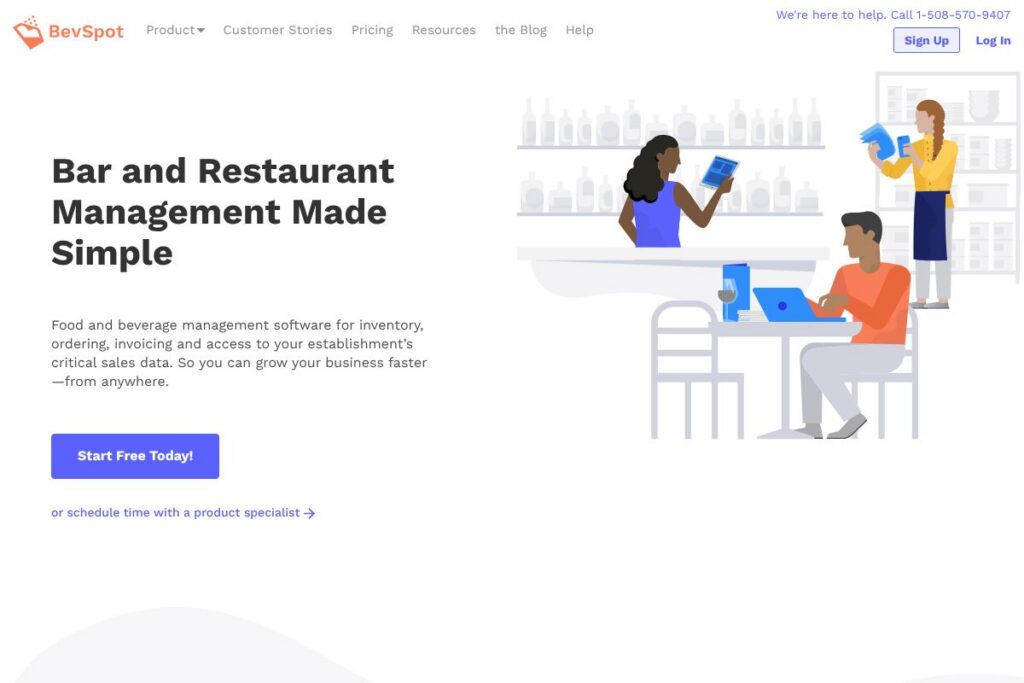
BevSpot is a cloud-based food and beverage management platform designed to simplify inventory, purchasing, invoicing, and recipe costing for restaurants, bars, and hospitality groups. The product centralizes inventory counts across multiple locations, connects sales to stock levels through POS integrations, and surfaces reporting that helps operators control cost of goods sold and sitting inventory.
Compared with MarketMan, which targets larger operations with deep procurement workflows, BevSpot emphasizes faster inventory cycles and one-click ordering for day-to-day operators. Against Toast and Upserve, which are POS-first platforms with add-on inventory modules, BevSpot focuses on inventory and purchasing as the core product rather than an extension, making it a better fit for teams that need specialized purchasing workflows and recipe cost control.
BevSpot works especially well for small chains, multi-location independent groups, and hospitality teams that need simple mobile inventory, fast ordering from vendors, and integrated recipe costing. Its straightforward mobile app and reporting make it a practical choice for operators who want clear visibility into sitting inventory and item-level variance without a heavy implementation process.
How BevSpot Works
Inventory is captured via the mobile app or web interface using shelf to sheet sorting, custom storage areas, and offline mode for busy service periods or poor connectivity. Users scan or select items, record counts, and submit inventories which automatically update on the platform for real-time tracking across locations.
Ordering flows are tied to vendor catalogs and usage data; BevSpot builds suggested orders using weekly usage or pars, lets users adjust the Smart Cart, and submits orders to vendors directly from the app. Recipe and menu management links ingredient costs to recipes so cost percentages update as invoices and price changes are recorded.
Reporting pulls sales data from your POS and reconciles it with inventory reductions to show COGS, sitting inventory, variance, and price trends. Operators can use these reports to identify high-variance items, detect theft or waste, and make purchasing decisions based on historical price movements.
What does BevSpot do?
BevSpot bundles inventory tracking, vendor ordering, recipe costing, and sales-connected reporting into a single platform. Core capabilities include mobile-first inventory capture, one-click vendor ordering, recipe and menu costing, and analytics that connect sales to inventory. The platform recently emphasized smarter ordering workflows and improved reporting that highlights item-level variance and price changes.
Let’s talk BevSpot’s Features
Inventory Management
Inventory management supports custom storage locations, shelf to sheet sorting to speed counts, offline mode for disconnected environments, and centralized inventories across multiple sites. This reduces time on inventory rounds and helps teams run consistent counts across shifts and locations.
Ordering and Vendor Management
Ordering integrates vendor catalogs and lets you build a Smart Cart based on weekly usage, pars, or current inventory positions so restocking is faster and more consistent. The ordering workflow supports sending purchase orders to vendors from inside the platform and tracking expected deliveries.
Recipe Costing and Menu Items
Recipe tools tie ingredient costs to recipes and menu items, calculate cost percentage automatically, and allow ingredient swaps to model price or margin impacts. This helps menu engineering decisions and cost-aware dish development.
Reporting and Analytics
Reporting includes COGS analysis, sitting inventory comparisons, price trackers that show fluctuations over time, and charts that highlight item-level variance. These reports are useful for spotting cost trends, tracking vendor price changes, and prioritizing procurement adjustments.
POS Integration and Sales Reconciliation
BevSpot connects to major POS systems to reconcile sales with inventory movement so managers can see which items are selling versus what was used. This provides a clearer picture of menu profitability and helps identify discrepancies between expected and actual usage.
Mobile App and Offline Access
The mobile app is designed for fast counting on the floor with intuitive controls and support for offline counts that sync when connectivity returns. This keeps staff productive during busy service periods and reduces dependency on fixed hardware.
Price Tracking and Variance Alerts
Price tracking records invoice-level price changes across items and highlights opportunities to switch vendors or adjust recipes to protect margins. Item-level variance reports call out unexpected changes so managers can investigate quickly.
With these capabilities BevSpot gives operators a focused suite for controlling inventory, making smarter purchasing decisions, and understanding menu profitability.
BevSpot pricing
BevSpot uses a subscription SaaS pricing model tailored to restaurant and hospitality customers, with options that scale for single units and multi-location operators. Because there is no public, dedicated pricing page available from the source material, pricing is typically provided via sales or demo conversations to match features, number of locations, and support needs.
BevSpot’s sales team and product pages outline tiered plans and enterprise options; to review the most current subscriptions and any available discounts, see BevSpot’s current pricing options and contact their sales or support teams for a plan that fits your operation.
What is BevSpot Used For?
BevSpot is used to reduce the time managers spend on inventory counts, improve ordering accuracy, and lower sitting inventory through more disciplined purchasing. Teams use it to centralize vendor catalogs, push orders from the platform, and maintain updated ingredient costs linked to recipes and menus.
It is ideal for operations that need regular inventory cycles, multi-location oversight, and a direct link between sales and inventory for more accurate COGS reporting. Restaurant groups, bars, and hotel F&B teams benefit from the combination of mobile counting, one-click ordering, and menu cost visibility.
Pros and Cons of BevSpot
Pros
- Fast inventory workflows: Mobile-first counting with shelf to sheet sorting, custom storage areas, and offline mode cuts time spent on inventory significantly. This speeds up day-to-day operations and reduces labor spent on counts.
- Integrated ordering and Smart Cart: Automated order suggestions based on usage and pars reduce manual ordering time and help maintain consistent stock levels. Users can place orders directly to vendors from the platform.
- Recipe-level costing: Tying ingredient prices to recipes keeps menu cost percentages up to date and helps with menu engineering and pricing decisions. Swapping ingredients to test margin impact is straightforward.
- Sales-connected reporting: POS integrations that reconcile sales and inventory provide clearer visibility into item-level profitability and variance, which supports data-driven purchasing decisions.
Cons
- Limited public pricing transparency: Pricing details are typically provided via demos or sales, which can slow initial evaluation for teams that prefer self-serve pricing research. Teams should contact sales to get tailored quotes.
- Platform specialization: Focus on beverage and food inventory makes it less of a one-stop solution for teams that want a single vendor to handle POS, payroll, and HR without integrations. Organizations seeking an all-in-one platform may need complementary systems.
- Advanced customization for enterprise: Large multiunit operators with complex procurement or ERP needs may require custom integration work and onboarding, which extends implementation timelines.
Does BevSpot Offer a Free Trial?
BevSpot offers demo and trial options for prospective customers. Interested teams can request a demo or trial to evaluate inventory workflows, ordering features, and recipe costing; contact BevSpot’s onboarding team or request access through BevSpot’s request a demo link to start.
BevSpot API and Integrations
BevSpot provides integrations with major POS systems so sales data can be reconciled with inventory and recipes. For details on specific connectors and supported POS partners, see BevSpot’s integrations page.
The platform also exposes developer and integration options for automating orders, syncing catalogs, and exporting reporting data to back office systems; teams with custom needs can contact BevSpot for API access and developer documentation through their support channels.
10 BevSpot alternatives
Paid alternatives to BevSpot
- MarketMan — Procurement and inventory software aimed at restaurants, with strong vendor management and purchasing controls for larger operations.
- Toast — POS-first restaurant platform that offers inventory and purchasing as add-on modules tightly integrated with sales and payments.
- BlueCart — Ordering and inventory tools focused on supplier marketplace and streamlined ordering for foodservice operators.
- YellowDog Inventory — Cloud inventory management built for hospitality with multi-location support and reporting tools.
- Upserve — Restaurant management suite with POS and analytics that include inventory and menu management features.
- CrunchTime — Enterprise-grade operations platform with deep inventory, forecasting, and labor management for chain restaurants.
- Square for Restaurants — POS with additional inventory features suitable for small to mid-size operations that want a unified payments and management stack.
Open source alternatives to BevSpot
- Odoo — Modular open source ERP that includes inventory, purchasing, and manufacturing modules which can be adapted for restaurants and foodservice purchasing.
- ERPNext — Open source ERP with inventory and procurement workflows, suitable for teams that want self-hosted control over inventory and costing.
- SambaPOS — Open source POS with community modules that can be extended for inventory and recipe management for small hospitality setups.
Frequently asked questions about BevSpot
What is BevSpot used for?
BevSpot is used to manage inventory, vendor ordering, recipe costing, and sales-connected reporting for food and beverage operators. It centralizes stock counts, simplifies purchase orders, and links recipes to ingredient pricing for menu cost control.
Does BevSpot integrate with my POS?
Yes, BevSpot connects to major POS systems to reconcile sales with inventory. These integrations allow you to compare actual sales to inventory depletion and improve COGS accuracy.
How does BevSpot handle recipe costing?
BevSpot tracks ingredient prices and automatically calculates recipe cost percentages. You can swap ingredients or update invoice prices to see immediate effects on menu profitability.
Can BevSpot manage multiple locations?
Yes, BevSpot supports centralized management of multiple locations. You can run inventories across sites, consolidate reporting, and manage vendor orders for single or multiple units.
Is BevSpot suitable for small restaurants and bars?
BevSpot works well for small restaurants and bars as well as multiunit groups. Its mobile-first inventory and simple ordering workflows are designed to reduce time spent on counts and make purchasing more consistent.
Final verdict: BevSpot
BevSpot stands out as a focused inventory and purchasing system built specifically for food and beverage operators, emphasizing fast mobile inventory, one-click ordering, and recipe-level costing tied to sales. Its reporting surfaces item-level variance and price trends, which helps operators reduce sitting inventory and control COGS without a long implementation.
Compared with MarketMan, BevSpot favors simpler onboarding and mobile-first inventory workflows while MarketMan often targets larger chains with deeper procurement customization. For teams that want a practical, inventory-first solution with straightforward ordering and menu costing, BevSpot is a strong choice; organizations needing heavy customization or a combined POS and inventory vendor may evaluate alternative suites.