Botpress: An Overview
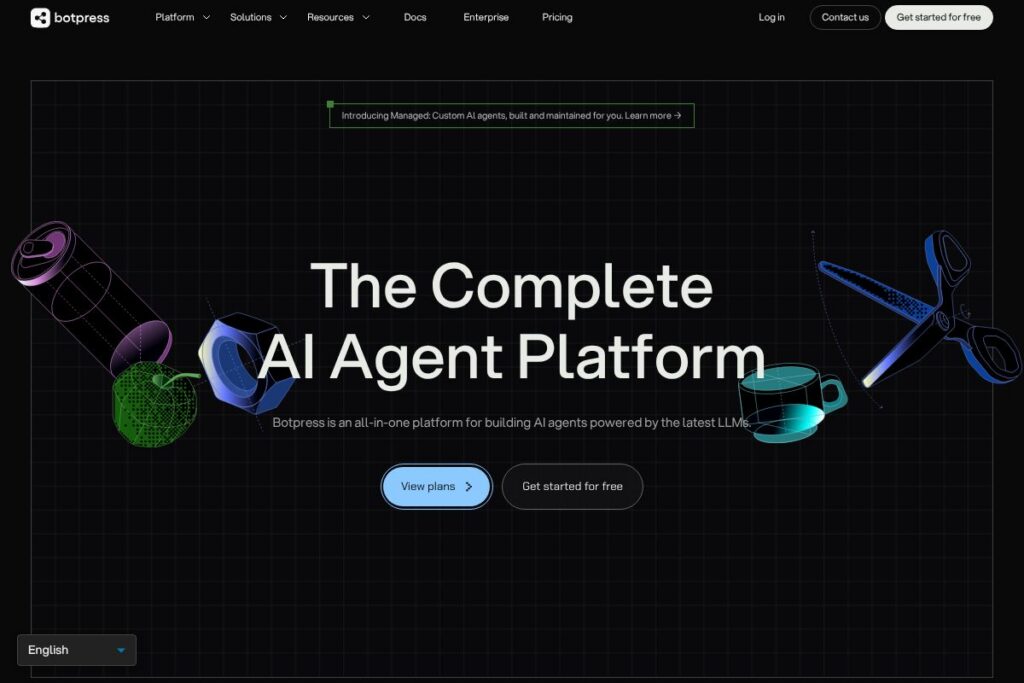
Botpress is an all-in-one AI agent platform that combines a developer-focused runtime, a custom inference engine, and tooling for deployment, observability, and integrations. It is designed to run conversational agents that use large language models to interpret user intent, access knowledge, and execute multi-step logic across channels.
Compared with Rasa, Botpress emphasizes a managed cloud experience and a built-in inference engine for structured, multi-step agent execution. Against Google Dialogflow, Botpress offers more extensible developer controls and a runtime that can execute custom JavaScript safely. Versus Microsoft Bot Framework, Botpress bundles agent lifecycle, memory, and monitoring tools rather than just SDKs and connectors.
All of this makes Botpress most useful for teams that need full control over agent behavior, reproducible agent environments, and connectors to business systems. It is well suited to customer support automation, developer-facing chat assistants, and internal knowledge agents that need versioning and observability in production.
How Botpress Works
Botpress coordinates agent behavior through a central inference engine that interprets user input, manages memory, decides which tools or connectors to call, and returns structured responses. Agents run in fully isolated, versioned runtimes so each deployment preserves behavior and compatibility over time.
Developers author flows, inject custom code at lifecycle hooks, and call the platform API to push messages, attach media, or manage agent state. Typical workflows include: ingesting knowledge sources, designing conversational policies, exposing endpoints or channel connectors, and monitoring executions in the observability console.
Botpress features
Botpress groups features around agent orchestration, developer control, and production operations. Core capabilities include a custom inference engine called LLMz for multi-step logic, sandboxed code execution, memory and context stores, channel connectors, and observability tools for inspecting agent actions and metrics. The platform also focuses on lifecycle features such as versioning and durable runtimes.
The platform includes several powerful capabilities:
LLMz custom inference engine
The LLMz engine coordinates prompts, tool selection, memory access, and code execution within the agent, enabling complex flows and structured outputs without manual orchestration. This reduces glue code and lets agents run multi-step logic reliably.
Sandboxed custom code
Agents can run custom JavaScript in an isolated sandbox to transform data, call internal services, or implement business logic. Sandboxed code keeps runtime safety while allowing deep customization for enterprise integrations.
Multi-channel deployment
Deploy agents to web chat, voice, Slack, Microsoft Teams, and other channels through built-in connectors or webhooks. Channel adapters let teams maintain a single agent while supporting multiple customer touchpoints.
Memory and context management
Persistent memory stores let agents keep user context across sessions and conversations, enabling personalized interactions and longer conversational state. Memory can be versioned and cleared as part of lifecycle management.
Observability and debugging
Detailed execution logs, step-level traces, and telemetry let teams inspect agent decisions and debug complex interactions. Observability tools also help measure intent coverage and routing accuracy over time.
Integrations and data connectors
Botpress supports integrations with external APIs, knowledge bases, and databases through configurable connectors and API calls. Teams can surface internal documents and CRM data to the agent for accurate, contextual answers.
Agent lifecycle and versioning
Each agent runs in a durable, versioned environment so updates are reproducible and rollback is straightforward. Versioning helps teams manage model changes, code updates, and configuration safely in production.
With these capabilities Botpress aims to reduce engineering overhead for production-grade agents while preserving developer control over behavior and integrations.
Botpress pricing
Botpress uses a hybrid pricing approach with options that scale from a free developer entry point to managed cloud and enterprise agreements; exact plan details are provided through the vendor. For current plan tiers, usage limits, and managed options see Botpress’s current pricing and plan details.
What is Botpress Used For?
Botpress is commonly used for automating customer support, routing and triage, and augmenting internal help desks with conversational assistants. Organizations deploy agents to handle FAQs, collect structured inputs, open tickets, and hand off to human agents when needed.
Engineering teams also use Botpress to build custom developer assistants, embedded in-product help, and process automation where agents need to call internal APIs or execute controlled business logic. Its versioned runtimes and observability features make it suited for production use where changes must be auditable and reversible.
Pros and Cons of Botpress
Pros
- Developer-friendly runtime: The platform exposes lifecycle hooks, sandboxed code execution, and API endpoints so engineers can build complex logic and integrations without external orchestration.
- Durable, versioned agents: Agents run in isolated, versioned environments which preserves behavior across updates and supports safe rollbacks.
- Built-in observability: Execution traces and logs provide visibility into how agents reason, which helps debugging and improving conversational quality.
- Multi-channel support: Native connectors and webhook-first design make it straightforward to deploy the same agent to web, messaging apps, and voice channels.
Cons
- Managed cloud complexity: Organizations with strict isolation or regulatory requirements may need to invest in self-hosting and operational overhead for enterprise-grade deployments.
- Learning curve for advanced capabilities: Using the sandboxed code, custom inference features, and lifecycle management effectively requires developer expertise and platform familiarity.
- Commercial options required for scale: Larger deployments typically shift to managed or enterprise agreements, which requires vendor engagement for pricing and SLAs.
Does Botpress Offer a Free Trial?
Botpress offers a free developer entry point and paid managed and enterprise options. The free tier lets teams build and experiment with agents, while managed cloud and enterprise agreements provide production SLAs and support; view Botpress’s current pricing and plan details for full comparisons.
Botpress API and Integrations
Botpress provides a developer-focused API and runtime endpoints for sending messages, managing agent state, and provisioning resources; see the Botpress API documentation for endpoint details and examples. The platform also supports common integrations and connectors to messaging channels, CRMs, and knowledge bases, enabling agents to surface internal data and trigger downstream workflows.
10 Botpress alternatives
Paid alternatives to Botpress
- Google Dialogflow: Cloud-native conversational platform with strong intent classification and integration into Google Cloud services.
- IBM Watson Assistant: Enterprise assistant tooling with dialog design, analytics, and deep integration into IBM Cloud and enterprise systems.
- Microsoft Power Virtual Agents: No-code and pro-developer paths for building chatbots that integrate with Microsoft 365 and Azure.
- Intercom: Customer messaging platform with automation and AI features focused on support and sales workflows.
- Ada: Customer service automation platform that combines no-code flows with AI for support teams.
- Zendesk Answer Bot: Support-focused automation that integrates tightly with Zendesk ticketing and help center content.
Open source alternatives to Botpress
- Rasa: Open-source conversational framework for building custom NLU pipelines and dialogue management with self-hosting options.
- DeepPavlov: Open-source library for conversational systems and NLP pipelines, suited for research and custom solutions.
- OpenDialog: Dialogue management framework focused on complex conversational design and multi-turn behavior.
- Microsoft Bot Framework SDK: An SDK-centric approach for building bots with flexible hosting options and rich channel support.
Frequently asked questions about Botpress
What is Botpress used for?
Botpress is used to build, deploy, and operate conversational AI agents for customer support, automation, and internal tools. Teams use it to connect agents to knowledge sources, run custom logic, and deploy across chat and voice channels.
Does Botpress have an API?
Yes, Botpress exposes APIs for messaging, agent management, and runtime control. Developers can consult the Botpress API documentation for endpoints and code samples.
Is Botpress open source?
Botpress provides self-hosting options alongside a managed cloud offering. The platform supports developer workflows for self-hosted runtimes and a hosted cloud product for teams that prefer a managed service.
How much does Botpress cost?
Botpress uses tiered options with a free developer entry point and paid managed cloud and enterprise plans. For the latest plan features and limits see Botpress’s current pricing and plan details.
Can Botpress connect to Slack and other channels?
Yes, Botpress supports channel connectors such as Slack, Microsoft Teams, web chat, and voice integrations. It also integrates with external systems via APIs and custom connectors to surface internal data.
Final verdict: Botpress
Botpress excels at giving developer teams the tools to build production-grade AI agents with control over runtime behavior, memory, and custom logic. The platform’s custom inference engine and sandboxed execution reduce the amount of external orchestration engineers must write, while versioned runtimes and observability features support safe production deployments.
Compared with Rasa, which is heavily focused on self-hosted open-source tooling, Botpress strikes a middle ground by offering a developer-first runtime plus a managed cloud path. On pricing and features, Rasa typically requires more in-house engineering for integrations and hosting, whereas Botpress packages runtime orchestration, observability, and managed options that can shorten time to production for teams that prefer a consolidated agent platform.