Chatfuel: An Overview
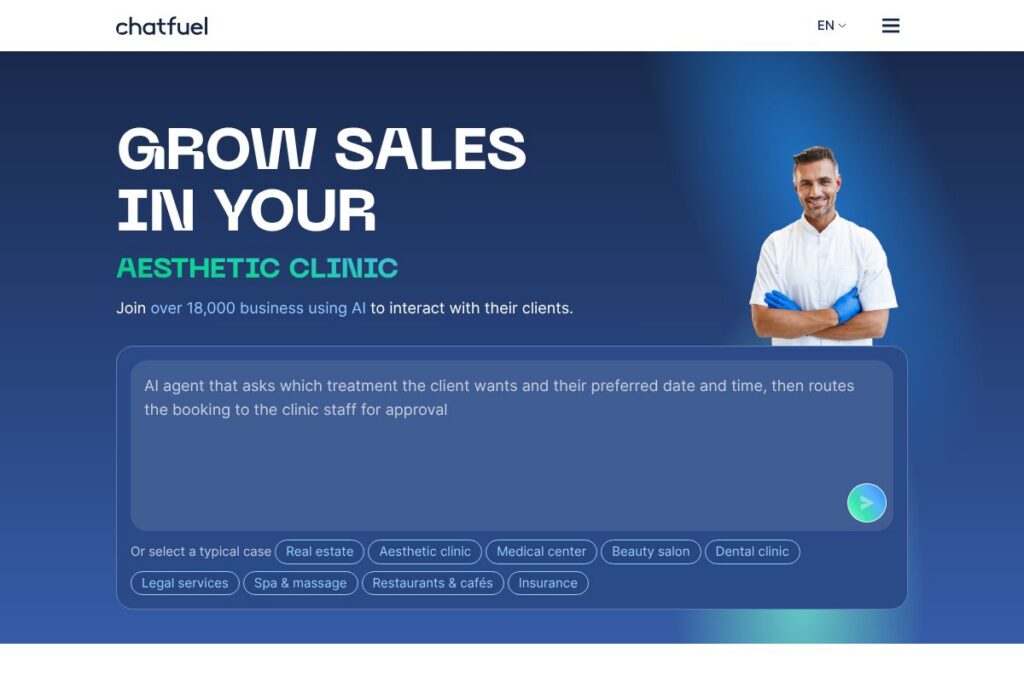
Chatfuel is a messaging platform that connects businesses to customers via the WhatsApp Business API, with built-in conversational automation and optional ChatGPT-powered replies. It centralizes lead capture, appointment booking, automated offers, and customer support workflows in one interface so teams can manage high-volume conversations without switching between tools.
Compared with ManyChat, which emphasizes Facebook Messenger and Instagram flows, Chatfuel concentrates on WhatsApp as an official API partner and adds enterprise-level API access for high-volume messaging. Compared with Twilio, which provides low-level SMS and WhatsApp primitives, Chatfuel supplies a higher-level bot builder, templates, and prebuilt sales workflows that reduce time to deployment. Against Zendesk and other support-focused platforms, Chatfuel pairs conversation automation with marketing features so teams can both support customers and drive repeat business from the same channel.
All of this makes Chatfuel particularly suited to businesses that rely on WhatsApp for customer interactions, such as clinics, restaurants, and retail brands that need appointment confirmations, loyalty reminders, and automated upsell offers.
How Chatfuel Works
Chatfuel connects to the WhatsApp Business API so messages flow between customers and the Chatfuel platform. Businesses build conversation flows using a visual editor, set automated triggers for replies and offers, and route complex cases to human agents in a shared inbox.
You can add AI-enhanced replies by enabling ChatGPT integration to draft responses, generate follow-up suggestions, or create promotional messages. Typical workflows include lead qualification, booking confirmations, automated payment links, and loyalty reminders that run on schedule.
Implementation usually involves verifying your WhatsApp Business account, provisioning API access through Chatfuel, configuring message templates and opt-in flows, and connecting any CRM or ecommerce systems to sync contact data and purchase history.
Chatfuel features
Chatfuel provides a mix of WhatsApp-centric automation, AI-assisted messaging, and workflow tools aimed at increasing conversions and reducing manual replies. Core capabilities center on building chat flows, AI-generated content, omnichannel inboxing, and integrations for CRM and ecommerce.
The Features That Make Chatfuel Shine
WhatsApp Business API integration
Chatfuel manages the connection to the official WhatsApp Business API so businesses can send template messages, notifications, and two-way conversations at scale. This removes much of the infrastructure complexity behind provisioning a WhatsApp number and submitting template messages for approval.
ChatGPT-powered responses
AI can draft replies, generate promotional copy, or suggest response options for agents, helping teams respond faster while keeping tone consistent. This is useful for handling repetitive queries and producing tailored follow-ups that increase conversions.
Visual bot builder and templates
The platform includes a drag-and-drop builder and industry-specific templates for use cases like appointments, lead qualification, and promotions. Templates reduce setup time and can be customized to capture business-specific data and trigger CRM updates.
Unified inbox and agent routing
A shared inbox centralizes WhatsApp threads and other connected channels so agents can pick up conversations and escalate when needed. Routing rules and tags help distribute workload and ensure SLAs for support teams.
CRM and ecommerce integrations
Chatfuel connects with common CRMs, payment providers, and ecommerce platforms to push contact data and order details into conversations. That enables context-aware messaging such as order status updates, receipts, and personalized product recommendations.
Analytics and reporting
Built-in analytics track message throughput, template performance, conversion metrics like confirmed appointments, and agent response KPIs. These insights help teams refine message timing and automation logic to improve outcomes.
With these features, Chatfuel focuses on practical conversation management: reduce manual responses, keep customers engaged on WhatsApp, and tie messages to measurable sales and retention outcomes.
Chatfuel pricing
Chatfuel uses a commercial subscription model with plans that vary by message volume, feature set, and WhatsApp API provisioning. Because pricing is tied to WhatsApp API usage and business scale, Chatfuel publishes plan options and enterprise details on their site rather than a single static price list.
For specific plan tiers, message quotas, and enterprise arrangements, review Chatfuel’s available options on the Chatfuel homepage or consult Chatfuel’s business contact channels for a tailored quote.
What is Chatfuel Used For?
Chatfuel is commonly used for customer support automation, appointment scheduling, and conversational sales on WhatsApp. Teams deploy it to confirm bookings, send reminders, process simple payments, and follow up with automated offers that increase upsell acceptance.
Marketing and loyalty workflows are another frequent use case: automated drip messages, re-engagement sequences, and personalized promotions help businesses increase repeat visits and retention without adding headcount to support teams.
Pros and Cons of Chatfuel
Pros
- WhatsApp-first platform: As an official WhatsApp Business API partner, Chatfuel simplifies provisioning, template approval, and scaled messaging while complying with platform policies. This reduces time and technical overhead for businesses that rely on WhatsApp.
- AI-assisted messaging: Built-in ChatGPT integration helps draft responses, create promotional text, and automate common conversational tasks, which can lift reply speed and message quality across teams.
- Prebuilt templates for industries: Industry templates for clinics, salons, restaurants, and real estate accelerate deployment for common workflows such as appointment confirmations and lead qualification.
- Unified agent inbox: Centralized conversation management and routing reduce context switching and make handoffs between bots and human agents smoother.
Cons
- WhatsApp-focused constraint: While powerful on WhatsApp, teams that need broad multi-channel coverage may require additional tools to cover email, voice, or in-app chat at the same depth.
- Enterprise onboarding complexity: Connecting to the WhatsApp Business API and scaling templates can involve compliance steps and verification that extend time to launch compared with consumer messenger integrations.
- Potential dependency on third-party AI: Using ChatGPT integration introduces an external dependency for message generation and may require additional review workflows for brand safety and compliance.
Does Chatfuel Offer a Free Trial?
Chatfuel offers a 7-day free trial. The trial provides access to core automation and AI features so teams can test conversational flows, WhatsApp messaging, and template functionality before committing to a paid plan.
Chatfuel API and Integrations
Chatfuel provides webhook support and integration points to connect with CRMs, ecommerce platforms, and analytics tools; developers can extend bot behavior using custom endpoints. Explore Chatfuel’s developer resources in the Chatfuel documentation to see available webhooks and integration patterns.
Key direct integrations include CRM systems, payment gateways, Zapier for no-code connectors, and native support for Facebook and Instagram messaging, which helps businesses coordinate conversations across related channels.
10 Chatfuel alternatives
Paid alternatives to Chatfuel
- ManyChat — Focuses on Messenger, Instagram, and SMS with a visual builder and marketing automation features geared to ecommerce and small businesses.
- Twilio — Provides programmable messaging APIs including WhatsApp, offering granular control for developers building custom conversational systems.
- Zendesk — Combines a ticketing system and messaging channels for support-centric teams with strong routing and SLA features.
- Intercom — Emphasizes conversational support and product messaging with in-app chat, outbound campaigns, and a developer-friendly API.
- Freshdesk Messaging — Offers omnichannel messaging and CRM features aimed at customer support teams with simple bot building and ticketing.
Open source alternatives to Chatfuel
- Rasa — An open source conversational AI framework for building custom chatbots with full control over NLU and dialogue policies.
- Botpress — A developer-oriented platform with a visual flow editor and modular architecture that can be self-hosted.
- Rocket.Chat — An open source communication platform that supports chat automation and integrations for teams that prefer self-hosting.
Frequently asked questions about Chatfuel
What platforms does Chatfuel support for messaging besides WhatsApp?
Chatfuel supports WhatsApp plus integrations with Facebook Messenger and Instagram messaging. It also connects to CRMs and third-party tools through webhooks and connector services like Zapier.
Can Chatfuel use ChatGPT to generate replies?
Yes, Chatfuel can integrate ChatGPT for AI-assisted reply drafting. Teams can enable AI to produce message suggestions, promotional copy, and follow-up texts while retaining human review when needed.
Does Chatfuel provide analytics on message performance?
Chatfuel includes analytics for message throughput, template performance, and conversion metrics. These reports help optimize timing, templates, and automation rules to improve appointment confirmations and sales outcomes.
Is Chatfuel suitable for small businesses like clinics and salons?
Yes, Chatfuel is well suited to small businesses that use WhatsApp for bookings and customer outreach. The platform provides templates and automation designed for appointment confirmations, loyalty reminders, and automated offers.
Does Chatfuel offer developer APIs or webhooks for custom integrations?
Yes, Chatfuel exposes webhooks and developer endpoints for integration. Developers can connect Chatfuel to internal systems, CRMs, and ecommerce platforms; see the Chatfuel documentation for integration details.
Final Verdict: Chatfuel
Chatfuel is a practical choice for organizations that run customer conversations primarily on WhatsApp and need a managed layer that combines automation, templates, and optional AI-generated text. It reduces the infrastructure work of connecting to the WhatsApp Business API and packages sales and support workflows in a single interface.
Compared to ManyChat, which publishes straightforward freemium plans and targets Messenger and Instagram, Chatfuel places more emphasis on WhatsApp API compliance and enterprise-grade messaging. That difference makes Chatfuel preferable for businesses whose customer base uses WhatsApp heavily, while ManyChat may be a better fit for teams prioritizing published pricing and multi-messenger marketing features.