What is LiveAgent
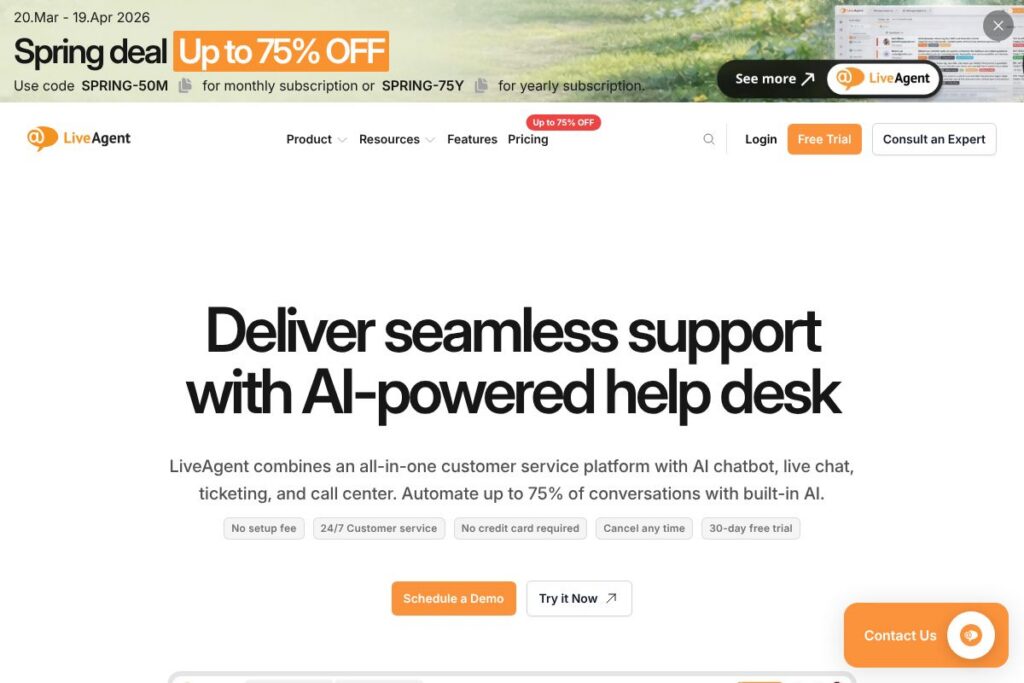
LiveAgent is an all-in-one customer service platform built to centralize support channels into a single dashboard so agents can manage conversations from email, live chat, phone, and messaging apps without switching tools. The product combines ticketing, a live chat widget, a built-in call center, knowledge base management, and an AI chatbot designed to reduce manual replies and speed resolution.
Compared with competitors, LiveAgent emphasizes a single, unified inbox and bundled telephony. Zendesk focuses on extensible enterprise workflows and a large app marketplace but commonly separates telephony into add-ons, while Intercom prioritizes conversational marketing and product-led messaging with a different pricing model. Freshdesk is similar in scope and price positioning, but LiveAgent differentiates by including a built-in call center and an AI chatbot in its core feature set.
All of this makes LiveAgent a practical choice for small to mid-size support teams and contact centers that want omnichannel coverage with lower setup complexity. It is especially useful for teams that need voice support integrated directly into their help desk and want to experiment with AI automation without assembling multiple vendors.
How LiveAgent Works
LiveAgent routes incoming messages from web chat, email, social channels, messaging apps, and phone calls into a unified inbox where agents work with tickets instead of separate channel interfaces. Automation rules, SLAs, and routing logic assign conversations to the right team or agent and surface context like previous tickets and customer data.
The AI chatbot can handle common inquiries using your knowledge base and website content, replying instantly and escalating to human agents with full conversation context when needed. Agents work in the LiveAgent web or desktop app, using canned responses, collision detection, and internal notes to collaborate on complex requests while the platform logs activity for reporting and compliance.
What does LiveAgent do?
LiveAgent’s core capabilities center on omnichannel message consolidation, AI-driven chat automation, telephony, and ticket automation. The platform includes many standard help desk tools plus a built-in call center, integrations with external apps, and migration services to move historical data from other systems.
Let’s talk LiveAgent’s Features
Omnichannel Inbox
All messages from email, live chat, Facebook, Instagram, X, WhatsApp, Viber, Telegram, and phone arrive in a single shared inbox so agents can follow entire customer journeys without context switching. This reduces missed conversations and provides a single timeline of interactions for better follow-up and reporting.
AI Chatbot
The AI chatbot answers routine questions 24/7 in over 100 languages, using your knowledge base and website content to provide instant responses and suggested article links. It hands off conversations to human agents when it detects more complex issues, preserving chat history and predicted intent to reduce resolution time.
Live Chat Widget
The live chat widget embeds on websites to capture real-time visitor inquiries, supports proactive chat invitations, and lets agents transfer chats between channels. It includes typing indicators, file transfer, and browser-based co-browsing options where supported to speed troubleshooting.
Built-in Call Center
LiveAgent includes a native call center with softphone support, call routing, recording, and IVR capabilities so teams can handle voice as a first-class channel without third-party telephony. Call logs and recordings attach directly to the customer ticket for consolidated history and reporting.
Ticketing and Automation
The ticketing system converts channel messages into assignable tickets with priority, tags, and automated rules for routing, escalation, and SLA enforcement. Automation reduces repetitive tasks, allowing teams to set triggers for canned replies, follow-ups, and ownership changes.
Knowledge Base
An integrated knowledge base stores articles that feed the chatbot and provide self-service resources for customers and agents. Public and internal article visibility controls, versioning, and analytics help teams improve content where it has the most impact.
Reporting and SLA Management
Built-in reporting includes ticket trends, agent performance, first reply times, and SLA compliance metrics to monitor team health and identify training needs. Custom dashboards and export options support both operational monitoring and executive reporting.
Integrations and API
LiveAgent connects with many third-party apps and services through built-in integrations and an API to sync customer data, e-commerce orders, or CRM records. Key integration partners include Zapier, Shopify, WordPress, and popular CRM platforms which extend workflow automation and data enrichment.
Concierge Migration and Onboarding
The platform offers migration services from common help desk systems to move tickets, users, and settings, plus 24/7 onboarding support to speed implementation. This reduces downtime and preserves historical context when switching providers.
With these capabilities LiveAgent aims to reduce ticket volume through AI and automation while consolidating voice and digital channels into a single support workflow, improving response times and consistency across channels.
LiveAgent pricing
LiveAgent uses a subscription pricing model billed per agent, with multiple plan tiers designed for Small, Medium, Large, and Enterprise teams. Annual billing provides a published entry rate, and enterprise options include custom features like dedicated support and advanced SLAs.
Monthly Billing:
Monthly billing options are available for organizations that prefer month-to-month payments; contact sales or view LiveAgent’s product pages for the current monthly rates and plan specifics. For details and the latest plan comparisons, see LiveAgent’s homepage.
Annual Billing:
Annual billing is available and is typically shown as the most economical option. The platform’s published starting rate is $15 per agent/month when billed annually, and higher tiers add features such as the call center, social channel integrations, SLA management, and dedicated account support. For full plan details and any promotional offers, check LiveAgent’s current pricing options.
Enterprise
Enterprise customers receive custom quotes that account for seat volume, telephony needs, dedicated onboarding, and SLA terms. To discuss large deployments and tailored features, contact LiveAgent sales through the enterprise contact form.
What is LiveAgent Used For?
LiveAgent is commonly used for customer service, technical support, and contact center operations where teams must manage multiple channels and scale with automation. It suits e-commerce businesses, SaaS companies, and service providers that need voice integration alongside digital channels.
Teams also deploy LiveAgent for self-service initiatives using its knowledge base and AI chatbot to reduce incoming ticket volume, and for consolidating support after mergers or product expansions thanks to its migration services and broad integration set.
Pros and cons of LiveAgent
Pros
- Omnichannel consolidation: Centralizes email, chat, social, messaging apps, and phone into one inbox so agents maintain context across channels and reduce missed conversations.
- Built-in call center: Includes telephony features natively, eliminating the need for separate PBX or third-party voice add-ons for many use cases.
- AI-driven automation: The chatbot and automation rules can handle a large share of routine inquiries, lowering agent workload and improving first response times.
- Concierge migration and support: Migration services and 24/7 customer service help teams switch over quickly with minimal disruption.
Cons
- Learning curve for power users: With over 175 features and many configuration options, initial setup and customization can be time consuming for administrators.
- Advanced reporting may require configuration: Some teams may need to build custom reports or dashboards to surface specific business metrics beyond the built-in views.
Does LiveAgent Offer a Free Trial?
LiveAgent offers a 30-day free trial with no credit card required. The trial provides access to core features including live chat, ticketing, the AI chatbot, and the built-in call center so teams can evaluate workflow, integrations, and automation before committing to a paid plan.
LiveAgent API and Integrations
LiveAgent provides a developer API for automating workflows, creating and updating tickets, and integrating customer records with external systems; see the API documentation for endpoint details and authentication. The platform also supports native integrations with tools like Zapier, Shopify, WordPress, and major CRMs to sync data and extend automation.
If you rely on a specific third-party or proprietary system, LiveAgent’s API and Zapier connector make it possible to automate common tasks such as ticket creation from form submissions, CRM updates, or order lookups during conversations.
10 LiveAgent alternatives
Paid alternatives to LiveAgent
- Zendesk — A widely used enterprise help desk with a large app marketplace and extensive workflow customization for customer service teams.
- Freshdesk — Feature-rich support platform with multichannel ticketing, automation, and customer self-service options aimed at SMBs and enterprises.
- Intercom — Focused on conversational experiences, product messaging, and targeted chat campaigns alongside support tools.
- Help Scout — Email-first help desk with shared inboxes, docs, and a simple UX aimed at small to mid-size businesses.
- Zoho Desk — Affordable multichannel help desk with strong CRM integration and automation tools within the Zoho ecosystem.
- HubSpot Service Hub — Service tools built into HubSpot’s CRM with ticketing, knowledge base, and customer feedback features.
- Front — Shared inbox and collaboration tool that combines email, chat, and social messages with workflows and analytics.
Open source alternatives to LiveAgent
- Zammad — Open source help desk with ticketing, chat, and phone integration that can be self-hosted and customized.
- osTicket — A lightweight, open source ticketing system suitable for small teams looking for a simple self-hosted solution.
- UVdesk — Open source help desk tailored for e-commerce platforms, with multi-channel support and customization options.
Frequently asked questions about LiveAgent
What is LiveAgent used for?
LiveAgent is used as an omnichannel help desk for customer support and contact center operations. It centralizes emails, chats, social messages, and calls into one system so teams can manage conversations and SLAs from a single interface.
Does LiveAgent include a call center?
Yes, LiveAgent includes a built-in call center. Telephony features such as softphone support, call routing, recording, and IVR attach directly to tickets and reporting.
How much does LiveAgent cost per agent?
LiveAgent pricing starts at $15 per agent/month when billed annually. Higher tiers and enterprise packages add features like advanced telephony, social channel integrations, and dedicated support.
Can LiveAgent’s AI chatbot work 24/7?
Yes, LiveAgent’s AI chatbot operates 24/7 in multiple languages. It uses your knowledge base and site content to answer common questions and passes complex issues to human agents with context.
Does LiveAgent integrate with third-party apps?
Yes, LiveAgent integrates with popular tools such as Zapier, Shopify, and major CRMs. The platform also exposes an API so teams can build custom integrations and automate ticket workflows.
Final verdict: LiveAgent
LiveAgent stands out for combining omnichannel ticketing, a native call center, and AI chatbot capabilities into a single platform that reduces the need for multiple vendors. Its unified inbox and concierge migration services make it a practical option for teams that want to centralize voice and digital support quickly.
Compared with Zendesk, LiveAgent typically offers a lower published entry price and includes telephony and AI features in its core offering rather than as separate add-ons. For organizations that require a bundled telephony solution and built-in automation without assembling several third-party services, LiveAgent presents a cost-effective and feature-complete choice. For the latest feature set and plan comparisons, review LiveAgent’s product tour and resources.