screets: An Overview
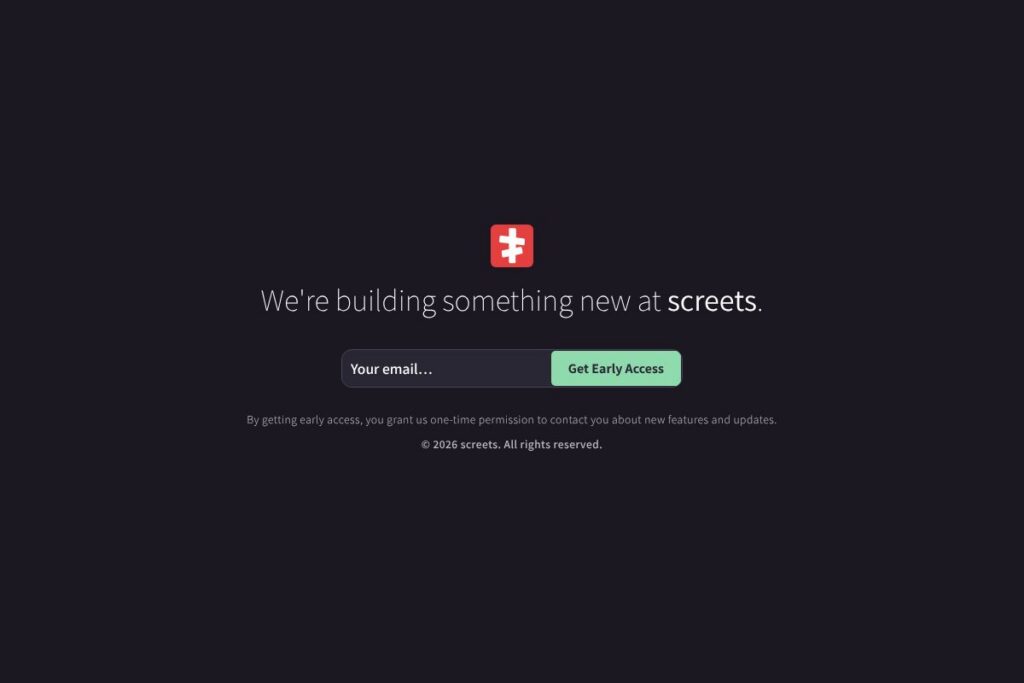
screets is an early-access platform focused on private sharing and controlled feature rollouts. The public messaging indicates the product is in active development and that people can sign up for early access, which also grants one-time permission to receive updates about new features and product changes.
The platform sits conceptually between secure messaging apps and invite-only social tools. Compared with Signal and Telegram, screets appears to be oriented toward experimental feature releases and private groups rather than established, end-to-end encrypted messaging at scale. Compared with Discord, screets seems aimed at smaller, invite-based communities and feature testing rather than large public servers.
All of this makes screets a fit for early adopters, product-minded users, and small teams who want to test new sharing workflows and provide feedback. The early-access model suggests it will evolve quickly, so users who participate can shape feature priorities and get a look at functionality before general release.
How screets Works
Signing up for screets begins with an early-access request where users provide contact details to receive updates about features. That one-time permission lets the team notify participants about new releases, experimental modes, and invitations to try features as they roll out.
Once accepted into early access, typical workflows are likely to include creating private spaces for sharing content, inviting specific people, and using short-lived or experimental feature sets to test functionality. Product teams and testers can expect iterative updates, feedback collection, and periodic invitations to new feature trials through the platform.
What does screets do?
screets is organized around private sharing, early feature access, and direct product updates for participants. Core capabilities implied by the early-access model include invite-based access controls, update notifications to testers, and a feedback loop between users and the product team. The messaging suggests the team will iterate publicly with opt-in testers.
Early-access signup
The platform provides a simple opt-in process for early access that grants the team permission to contact users about product changes and new capabilities. This streamlines onboarding for testers and creates a controlled environment where features can be evaluated before wide release.
Private sharing spaces
screets focuses on invite-only or limited-access sharing areas that let users control who sees content and when. This model helps small groups experiment with new content and interaction patterns without exposing features to a broad audience.
Feature preview and updates
Participants receive direct updates about new features, bug fixes, and product announcements, which accelerates feedback cycles and drives iterative development. Early testers often get access to features before public release and can report issues or suggest improvements.
Feedback and testing workflows
The platform is designed to capture feedback from early users, enabling product teams to prioritize and refine features based on real-world usage. This benefits organizations that want to validate ideas quickly with a controlled user group.
With screets you get a workspace oriented around controlled releases and user-driven iteration, making it useful for teams that want to validate features in a private setting prior to a broader launch.
screets pricing
screets does not publish a dedicated pricing page at this time; pricing and plan details are not publicly listed. For the most current information on plans, availability, and any commercial offerings, check the screets homepage at screets early access and information.
What is screets Used For?
screets is commonly used for testing new sharing and communication features in a private, invite-only environment. Product teams and independent creators use early-access environments to validate interaction designs, gather user feedback, and iterate on feature sets before wide release.
The platform also works well for small communities that want a private place to share drafts, experiment with formats, or coordinate releases. The early-access model makes it particularly suitable for those who want to influence product direction and try experimental tools before they are finalized.
Pros and Cons of screets
Pros
- Controlled early access: The early-access model creates a focused group of testers who get previews of new features and can influence development priorities. This makes screets useful for teams that value rapid iteration and direct feedback loops.
- Private sharing focus: Invitation-only sharing spaces reduce public exposure and make it easier to test sensitive workflows or prototype content with a limited audience. That benefits creators and product teams running closed trials.
- Direct update channel: By granting one-time permission to be contacted, users receive timely information about releases and bug fixes, which speeds up the testing and improvement cycle.
Cons
- Limited public documentation: As an early-stage product, screets currently lacks a dedicated pricing page and extensive public documentation, which can make evaluation harder for organizations planning adoption.
- Unclear security posture: The public messaging does not detail security or privacy guarantees, so enterprises and privacy-conscious users may need more assurance before using it for sensitive data.
- Uncertain integration support: Early-stage platforms often have limited third-party integrations at launch, which may require custom work to connect screets to existing workflows.
Is screets Free to Try?
screets offers a free early-access signup that lets users join beta testing and receive updates about new features. The early-access flow grants the team one-time permission to contact participants; further pricing, paid tiers, or enterprise options will be communicated through the platform or the screets homepage at screets early access and information.
screets API and Integrations
There is no public API documentation linked from screets’ early-access messaging, so developer-level integration details are not yet available. For integration requests or developer access, contact the team via the screets homepage at screets early access and information.
Future integration possibilities commonly include identity providers, calendar and file services, and notification platforms; teams evaluating screets should expect integrations to arrive after initial product stabilization and can request priority connectors through the early-access contact flow.
10 screets alternatives
Paid alternatives to screets
- Signal — A secure messaging app focused on end-to-end encryption and privacy, suitable for private conversations and small groups. See Signal’s privacy features for details.
- Telegram — A cloud-based messaging platform that offers channels, private groups, and bots for customized workflows. Review Telegram’s features to compare channel and bot capabilities.
- Discord — A platform for community building with voice, video, and persistent chat, often used for creator communities and private servers. Explore Discord’s features to see how servers and roles work.
- Slack — A team collaboration tool with channels, threads, and app integrations that supports formal business workflows and deep integrations. Check Slack’s integrations for app options.
- Microsoft Teams — An enterprise collaboration suite that integrates chat, meetings, and Office apps, best for organizations already using Microsoft 365. See Microsoft Teams capabilities for enterprise features.
- WhatsApp — A widely used messaging app with group chats and broadcast lists, useful for small private groups and mobile-first communities. Learn about WhatsApp’s communication features.
Open source alternatives to screets
- Matrix — A decentralized communication protocol that supports encrypted, federated messaging and interoperates with multiple clients. Visit Matrix.org for protocol details.
- Mattermost — An open source collaboration platform that provides self-hosted chat and integrations for teams that need control over data. Explore Mattermost hosting options.
- Rocket.Chat — A self-hosted chat platform with messaging, audio, video, and app integrations, suitable for teams requiring on-premise deployments. See Rocket.Chat features.
- Element — A Matrix client focused on usability and privacy that works with Matrix servers for encrypted group chat and collaboration. Check Element’s client features.
Frequently asked questions about screets
What is screets used for?
screets is used as an early-access platform for private sharing and feature testing. Participants sign up to test experimental features, join invite-only spaces, and receive product updates directly from the team.
Does screets cost money to join early access?
No, screets provides a free early-access signup. Users can join the early-access program at no charge and will be contacted about new features and updates as part of the program.
Can screets integrate with other tools?
Public integration details are not published yet. Early-access participants can request integrations and developer access through the screets contact flow on the homepage at screets early access and information.
Is screets secure for private content?
screets has a private sharing focus, but specific security guarantees are not detailed in the early-access messaging. Organizations with strict compliance needs should contact the team directly to review security, encryption, and data handling practices.
How do I get updates from screets?
By signing up for early access you grant permission to be contacted about updates and new features. The team uses that contact permission to notify participants about releases, experimental features, and invitations to try new capabilities.
Final Verdict: screets
screets is a platform aimed at early adopters and product teams who want to test private sharing and experimental features in a controlled environment. Its early-access model encourages feedback-driven development and gives testers a chance to shape the product before a broader launch.
Compared with a mature, privacy-focused alternative like Signal, which is free and focused on proven end-to-end encryption, screets currently offers early access to evolving features rather than a finished security and integration suite. If you want to shape a product and test invite-only workflows, screets is a suitable choice; if you need established encryption, integrations, and enterprise support immediately, consider a stable alternative such as Signal or Slack. For details on signing up and future pricing, visit the screets homepage at screets early access and information.