What is SevenRooms?
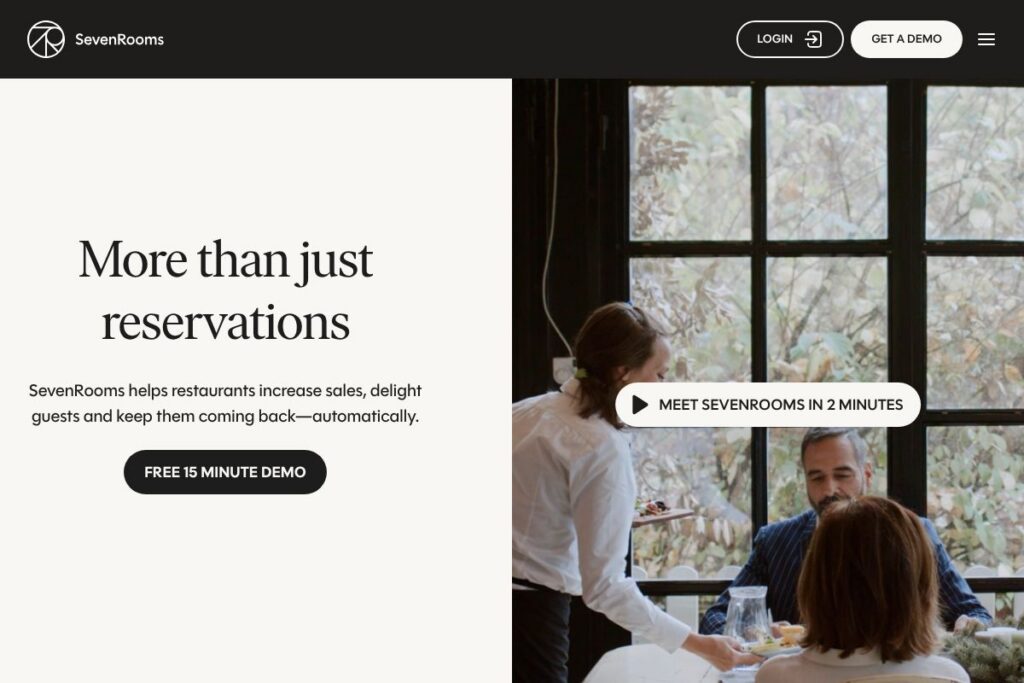
SevenRooms is a combined reservation, guest relationship management, and marketing platform built specifically for hospitality businesses. It creates and maintains a unified guest database, orchestrates bookings and seating, and automates targeted marketing based on guest behavior and preferences.
Compared with platforms like OpenTable and Resy, SevenRooms emphasizes ownership of guest data and integrated marketing. OpenTable is widely known for its discovery and large diner marketplace but often routes bookings through its network, while Resy focuses on high-volume hospitality and premium booking flows; SevenRooms focuses on connecting operations and CRM so venues can act on guest data directly across front-of-house and marketing channels.
All of this makes SevenRooms a practical choice for independent restaurants, multi-venue groups, and nightlife operators that need an integrated way to track guests, manage covers, and run automated campaigns without relying on multiple separate tools. The platform is particularly useful for teams that want to convert first-time diners into regulars through personalized service and follow-up communications.
How SevenRooms Works
SevenRooms captures reservation, walk-in and event data to build individual guest profiles that include contact details, visit history, preferences, dietary notes, and any tags you apply. Profiles are created automatically from bookings, point-of-sale interactions, and integrations, so staff can view a guest record during booking or at the table.
Front-of-house teams use the reservation and seating tools to manage waitlists, auto-seat algorithms, and turns, while marketing teams set up automated campaigns that target segments in the guest database. Workflows typically combine booking data with email and SMS triggers to send confirmations, pre-arrival messages, post-visit surveys, and re-engagement campaigns.
Implementation is usually handled as a staged rollout: connect primary POS and payment systems, migrate or consolidate reservation sources, configure the seating and auto-allocation rules, and then enable marketing automations and reporting. Larger groups can use multi-venue settings to aggregate guest relationships across locations and apply centralized campaigns.
SevenRooms features
SevenRooms’ core capabilities center on guest data, reservation and seating operations, and automated marketing. The platform includes guest profiles, reservation and waitlist management, marketing automation and email tools, event and ticketing support, integration connectors, and analytics that track covers, revenue, and campaign performance.
What Makes SevenRooms Stand Out
Guest profiles and CRM
Guest profiles are aggregated automatically from bookings, POS, and integrations to create a single view of each customer. Profiles store visit history, preferences, contact information, tags, and consent, which front-of-house teams and marketers can use to personalize service and craft targeted campaigns.
Reservation, seating and waitlist management
The reservation system includes booking pages that can be embedded on a site, a unified host stand interface for managing reservations and waitlists, and smart auto-seating algorithms to maximize covers. These tools help reduce manual seat assignment and improve throughput during peak service.
Marketing automation and campaigns
Built-in marketing tools allow teams to trigger email and SMS campaigns based on visit patterns, spend thresholds, or tags. Automated guest journeys can include confirmations, reminders, post-dining follow-ups, feedback requests, and re-engagement sequences designed to drive repeat visits.
Events and ticketing
SevenRooms supports ticketed events and group bookings by capturing attendee details at checkout and funneling them into the CRM. Event registration tools let operators sell tickets, capture payments, and collect guest data for post-event marketing and reporting.
Analytics and reporting
Reporting surfaces covers, revenue by channel, campaign performance, and guest acquisition metrics so operators can measure the impact of marketing and operational changes. Dashboards help compare venue performance and spot trends in guest behavior over time.
Integrations and API
The platform connects with POS systems, payment processors, email platforms, and channel partners to enrich guest data and automate workflows. For development teams, the SevenRooms API enables custom integrations, two-way data sync, and automation between systems; see the SevenRooms API documentation for endpoints and developer guides.
With these combined capabilities, the biggest practical benefit is that teams get one system that links front-of-house operations to marketing and reporting. That reduces fragmented data, shortens follow-up loops, and creates repeatable workflows for turning guests into regular customers.
SevenRooms pricing
SevenRooms uses a business-focused pricing approach with custom plans for different venue sizes and deployment needs, typically involving subscription tiers and enterprise arrangements rather than fixed public rates. Pricing depends on factors such as number of venues, required modules, and level of support.
For specific plan options and to request a quote, view SevenRooms’ current pricing and contact options on the SevenRooms website. The vendor typically provides demos and tailored proposals for single venues, multi-site groups, and enterprise customers.
What is SevenRooms Used For?
SevenRooms is used to manage reservations and seating, build and maintain a hospitality-grade CRM, and run automated marketing that targets guests based on behavior and preferences. Operators use it to capture contact information, reduce reliance on third-party booking marketplaces, and improve guest recognition across visits.
Typical use cases include high-volume restaurants optimizing turns with auto-seating, multi-venue groups consolidating guest relationships across locations, nightlife venues coordinating ticketed events, and marketing teams running automated email and SMS campaigns to increase repeat business.
Pros and Cons of SevenRooms
Pros
- Guest data ownership: Centralizes guest profiles and visit history so operators retain control of customer data and can run targeted campaigns without relying on third-party marketplaces.
- Integrated operations and marketing: Combines reservations, seating, and automated marketing in one platform, which reduces manual work and helps convert first-time guests into repeat customers.
- Multi-venue support: Allows restaurant groups and operators to aggregate data and run centralized programs across locations, which simplifies reporting and campaign management.
- Event and ticketing support: Handles ticketed events and group bookings while capturing attendee contact details for follow-up and monetization.
Cons
- Custom pricing model: Pricing is typically handled via custom quotes, which can make direct comparisons to competitors more time consuming without contacting sales.
- Implementation effort for integrations: Integrating POS, payment, and other systems can require technical setup and coordination, which may lengthen time to value for some teams.
- Feature overlap with existing tools: Businesses that already use specialized email marketing or POS platforms may need to rationalize toolsets to avoid feature duplication and ensure clean data flows.
Does SevenRooms Offer a Free Trial?
SevenRooms offers demos and custom trials through its sales team rather than a public freemium plan. Prospective customers can request a live demo to evaluate the platform’s features, and SevenRooms can set up trial access or pilot programs for selected venues; contact SevenRooms via the official site to arrange a demo or pilot.
SevenRooms API and Integrations
SevenRooms provides API access for developers to build custom integrations, synchronize guest and reservation data, and automate workflows between systems. For developer resources and endpoint details, consult the SevenRooms API documentation.
The platform integrates with a wide range of third-party systems including POS platforms, payment processors, email service providers, reservation channels, and channel managers. These connectors expand how guest data is collected and used across operations and marketing.
10 SevenRooms alternatives
Paid alternatives to SevenRooms
- OpenTable — A widely used reservation and discovery platform that also offers table management and guest features; known for a large diner marketplace and partner network.
- Resy — Focuses on premium dining experiences and reservation flows, with tools for operations and marketing tailored to high-volume or high-demand restaurants.
- Tock — Combines reservations and ticketed events with flexible pricing, often used by venues running special events and pre-paid experiences.
- Yelp Reservations — Integrates reservation management with Yelp listings and reviews to capture diners through the Yelp marketplace.
- Eat App — Reservation and guest management system that targets independent restaurants and groups with seat optimization and CRM features.
- Quandoo — Provides reservation technology and customer acquisition services for restaurants and hospitality venues.
- GuestBridge — Offers table management, event booking and CRM tools focused on guest engagement and operational efficiency.
Open source alternatives to SevenRooms
- Odoo — An open-source ERP with CRM and POS modules that can be customized for restaurant reservations, customer relationship tracking, and point-of-sale integration, suitable for teams willing to customize their stack.
- ERPNext — Open-source ERP that includes CRM, POS and sales modules which can be adapted to manage bookings, customer records, and inventory for hospitality operations.
- SuiteCRM — An open-source CRM platform that can be extended with custom modules to track guests, campaign activities, and reservation workflows when integrated with booking or POS systems.
Frequently asked questions about SevenRooms
What does SevenRooms do for restaurants?
SevenRooms centralizes reservations, guest profiles, and marketing automation for restaurants. It helps teams manage bookings, recognize returning guests, and run targeted email and SMS campaigns based on visit history.
Does SevenRooms have an API for custom integrations?
Yes, SevenRooms provides API access for developers. The SevenRooms API documentation outlines endpoints for guest records, bookings, and event data to integrate with POS, payment processors, and other systems.
Can SevenRooms replace third-party reservation marketplaces like OpenTable?
SevenRooms can reduce reliance on third-party marketplaces by giving operators direct booking and CRM tools. Many venues use SevenRooms alongside discovery channels or redirect bookings to their own branded booking flow to retain guest data.
Is SevenRooms suitable for multi-location restaurant groups?
Yes, SevenRooms supports multi-venue management and centralized reporting. Groups can consolidate guest relationships across locations, run cross-venue campaigns, and compare venue performance from a single dashboard.
How does SevenRooms help increase revenue for restaurants?
SevenRooms combines seating optimization, CRM-driven marketing, and event ticketing to drive more covers and repeat visits. Automated campaigns, targeted offers, and improved turnaround through auto-seating contribute to higher spend per guest and better table utilization.
Final verdict: SevenRooms
SevenRooms is strong where guest data ownership and integrated marketing meet operations. Its unified guest profiles, automated marketing flows, and seating optimization are designed for hospitality teams that need to act quickly on guest information and drive repeat visits, which often produces measurable revenue gains and lower commission costs compared with routing bookings exclusively through marketplaces.
Compared with OpenTable, SevenRooms places more emphasis on CRM and marketing capabilities and on giving operators direct control of guest data. OpenTable frequently combines subscription and per-reservation fees and offers large marketplace exposure, while SevenRooms typically uses custom commercial terms and focuses on driving direct bookings and operational efficiencies; businesses should contact each vendor to compare exact pricing and channel strategy for their market.
Overall, SevenRooms is a solid fit for independent restaurants, multi-site groups, and nightlife venues that want one system to handle front-of-house operations and lifecycle marketing. To evaluate fit for your business, request a demo and discuss integration with your POS and payment systems through SevenRooms’ sales team on the official site.