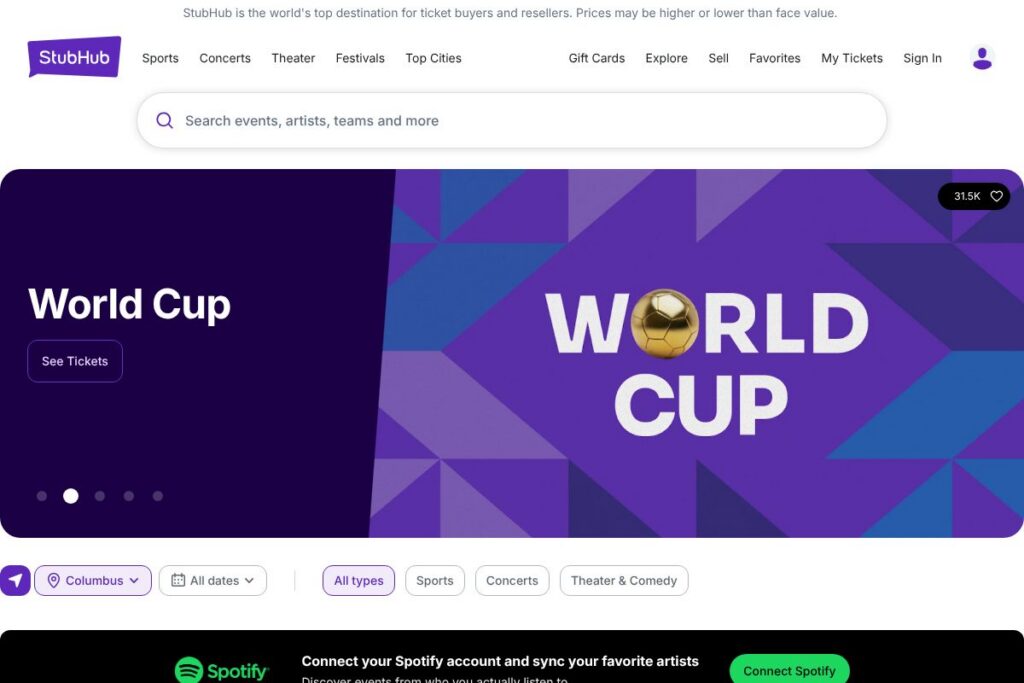
What is StubHub
StubHub is an online marketplace that connects buyers and sellers of event tickets for sports, concerts, theater, and live events. The platform lists tickets from both individual sellers and professional ticket sellers, and it includes seat maps, pricing visibility, and delivery options to complete purchases securely.
Compared with Ticketmaster and SeatGeek, StubHub emphasizes resale listings and a broad secondary market where prices reflect real-time supply and demand. Ticketmaster is often the primary ticketing channel for venues and promoters with face-value releases and integrated discovery tools, while SeatGeek focuses on unified search and deal scoring; StubHub sits between these approaches by offering a large catalog plus buyer protections and seller tools.
All of this makes StubHub well suited for buyers hunting sold-out events or specific seats and for casual or professional sellers who want a large audience to list tickets with flexible delivery methods. Its scale and search capabilities make it a practical choice for fans who need last-minute options or specific seating choices.
How StubHub Works
Users search for events by team, artist, venue, or city, then filter results by price, seat location, delivery type, and seller rating. Listings display seat maps on many events, a total price estimate including fees before checkout, and expected delivery methods such as mobile transfer or mail.
Sellers create listings with section/row/seat details or upload mobile tickets for transfer; StubHub manages buyer communication and handles payment processing once a sale completes. The platform provides guarantees for buyers against fraud or invalid tickets and offers seller payout options after the event concludes or the ticket is confirmed as delivered.
StubHub features
StubHub organizes its product around search, seat selection, secure transactions, and delivery flexibility. Core capabilities include a large searchable catalog, interactive seat maps, multiple delivery options, seller tools for listing and pricing, and buyer protections that cover refunds or replacements. The platform also offers mobile apps for on-the-go browsing and ticket transfers.
Let’s dive into the standout features:
Large searchable marketplace
The site aggregates thousands of events across sports, music, theater, and live entertainment, letting users search by artist, team, date, or venue and compare multiple listings for the same event. For buyers this increases the chance of finding specific seats or price points; for sellers it exposes listings to a wide audience, improving sell-through rates.
Interactive seat maps and seat-level detail
Interactive maps help buyers visualize sightlines and relative pricing for available seats, and listings often include section, row, and seat information plus photos when provided by sellers. This reduces uncertainty for buyers and supports more informed purchase decisions for premium and floor seats.
Ticket delivery options
StubHub supports several delivery methods including mobile transfer, instant download, mail delivery, and will-call pickup depending on the event and ticket type. Multiple delivery choices make it easier to buy last-minute or receive tickets in a preferred format, and mobile transfer simplifies entry for many stadiums and arenas.
Seller tools and pricing controls
Sellers can list single tickets or blocks, set listing prices, enable automatic pricing or relisting, and manage inventory through a seller dashboard. Tools for bulk uploads and analytics help frequent sellers monitor sales velocity and adjust prices to match demand.
FanProtect and buyer guarantees
The platform provides a guarantee that buyers will receive valid tickets in time for the event or receive a comparable replacement or refund. This protection is central to transaction confidence when buying on a resale marketplace and includes support channels for disputes and delivery problems.
Mobile app and notifications
Native mobile apps for iOS and Android let users browse, receive event alerts, and accept mobile transfers directly to their device wallet. Push notifications and wishlist alerts help fans monitor price changes and newly posted tickets for high-demand shows.
With these capabilities, StubHub’s biggest practical benefit is access to a broad secondary market combined with delivery options and buyer protections that reduce the risk of buying resale tickets.
StubHub pricing
StubHub operates on a transaction fee model applied to ticket purchases and seller payouts rather than fixed subscription tiers; fees vary by event, delivery method, and region. For current fee breakdowns for buyers and sellers, check StubHub’s detailed fee explanations on the StubHub help center and the selling tickets guidance.
What is StubHub Used For?
StubHub is commonly used to buy tickets when primary ticket sources are sold out or when a buyer needs specific seats or dates not available through box office channels. Fans use it to compare multiple listings, view seat maps, and secure last-minute entry to concerts, playoff games, and theater performances.
Sellers use StubHub to list excess tickets from personal inventory, monetize season tickets, or sell on behalf of others with tools for batch listings and managed delivery. Event professionals and small promoters can also reach StubHub’s marketplace through partner channels to liquidate unsold inventory.
Pros and Cons of StubHub
Pros
- Large inventory and event coverage: The marketplace lists a wide range of sports, concert, and theater events globally, increasing chances of finding tickets for high-demand shows.
- Buyer protections: Fan-focused guarantees and a dispute resolution process reduce the risk of invalid or undelivered tickets for purchasers.
- Flexible delivery methods: Support for mobile transfer, instant download, mail, and will-call makes it easier to receive tickets in different scenarios.
- Seller tools and analytics: Dashboards, bulk uploads, and pricing controls help sellers manage inventory and pricing efficiently.
- Mobile apps with notifications: Native apps provide real-time alerts and simplify mobile ticket transfer and entry.
Cons
- Service fees can be significant: Buyers and sellers pay fees that are added to the listing price or deducted from seller payouts, which can increase the final cost or reduce proceeds.
- Variable pricing due to resale: Prices reflect secondary market demand and can be well above face value for popular events, which may frustrate cost-sensitive buyers.
- Occasional delivery restrictions: Some venues restrict mobile transfers or require specific delivery methods, complicating some transactions.
- Competition from primary sellers: For first-release tickets, primary outlets like Ticketmaster may offer lower face-value options, making StubHub more of a secondary-market solution.
Does StubHub Offer a Free Trial?
StubHub is a paid marketplace with no free trial or subscription model. Buyers pay per ticket plus applicable service and delivery fees, and sellers are charged listing or seller fees that vary by region and listing type. For specifics on buyer fees and seller payout timing, review the StubHub fee information and policies.
StubHub API and Integrations
StubHub provides partner APIs and integration options for large sellers, ticket platforms, and enterprise partners through its developer and partner programs; see the StubHub developer portal for API documentation and partnership details. These APIs support inventory management, listing creation, and order processing for high-volume sellers.
On the consumer side, StubHub integrates with mobile wallets for ticket storage, calendar apps for event reminders, and social sharing features to promote listings. Third-party integrations and partnerships vary by region and event type, and platform partners can request program access through StubHub’s partner pages.
10 StubHub alternatives
Paid alternatives to StubHub
- Ticketmaster — Primary ticketing for many venues, often the first place tickets are released and sold at face value or with service fees. Offers integrated venue discovery and verified resale where available.
- SeatGeek — Aggregates listings from multiple sellers with a deal score and unified search to highlight value across marketplaces. Good for price comparison and mobile discovery.
- Vivid Seats — Secondary marketplace with a loyalty program and buyer guarantees, focusing on competitive listings for sports and concerts.
- Eventbrite — Primary ticketing and event management platform for small to medium events, with built-in registration tools and promotion features for organizers.
- AXS — Primary and secondary ticketing platform used by many arenas and promoters, with integrated mobile entry options and venue partnerships.
- TicketSwap — Peer-to-peer resale with capped fees and a focus on fair-priced resales and verified listings in select markets.
- StubHub competitors for international markets like Viagogo, which operates similar resale listings in some regions.
Open source alternatives to StubHub
- Pretix — An open-source ticketing system for event organizers that supports customizable checkout, voucher systems, and self-hosting for full control over sales. It is aimed at organizers rather than resale marketplaces.
- Attendize — Self-hosted ticket selling and event management software built with Laravel, suitable for small organizations that want an independent ticket storefront.
- Open Event — A FOSSASIA project providing open-source tools for event and ticket management, including apps and backend services for organizers.
- OSEM (Open Source Event Manager) — Community-oriented event management software designed for conferences and meetups, useful for organizers who need full control over registrations and ticketing.
Frequently asked questions about StubHub
What is StubHub used for?
StubHub is used to buy and sell tickets for sports, concerts, theater, and live events. Fans use it to find sold-out seats or specific locations, while sellers list extra tickets to reach a broad buyer base.
Does StubHub charge fees to buyers and sellers?
Yes, StubHub applies service and delivery fees to buyers and charges seller fees or commissions to sellers. Fee levels vary by event, region, and delivery method; consult the StubHub fee explanations for details.
Can I sell tickets on StubHub?
Yes, individuals and professional sellers can list tickets on StubHub. The platform provides listing tools, bulk upload options, and payout processes; see the selling tickets guide for instructions.
Does StubHub guarantee my tickets will be valid?
Yes, StubHub offers buyer protections that cover invalid or undelivered tickets. When a problem occurs, StubHub provides replacements or refunds under its guarantee policies as described in the FanProtect Guarantee information.
Is there a StubHub API for sellers and partners?
Yes, StubHub offers APIs and partner programs for high-volume sellers and enterprise integrations. Developers and partners can find documentation and program details on the StubHub developer portal.
Final verdict: StubHub
StubHub excels at providing access to a large secondary market for events, with searchable listings, seat maps, multiple delivery options, and buyer protections that reduce risk for resale purchases. For fans who need sold-out tickets or specific seating, StubHub’s breadth of inventory and seller tools make it a practical choice.
Compared with Ticketmaster, StubHub focuses more on resale liquidity and seller flexibility rather than acting primarily as a venue or promoter ticketing partner. While Ticketmaster often controls primary releases and may offer lower face-value options for initial buyers, StubHub gives broader post-release choice at variable prices and with protections for buyers and sellers.
Overall, StubHub is a strong option for fans who prioritize selection and seat choice on the secondary market, and for sellers who need a large audience and established delivery and payout processes. For price-sensitive buyers seeking face-value tickets, checking primary sellers like Ticketmaster first is advisable.