What is Writesonic
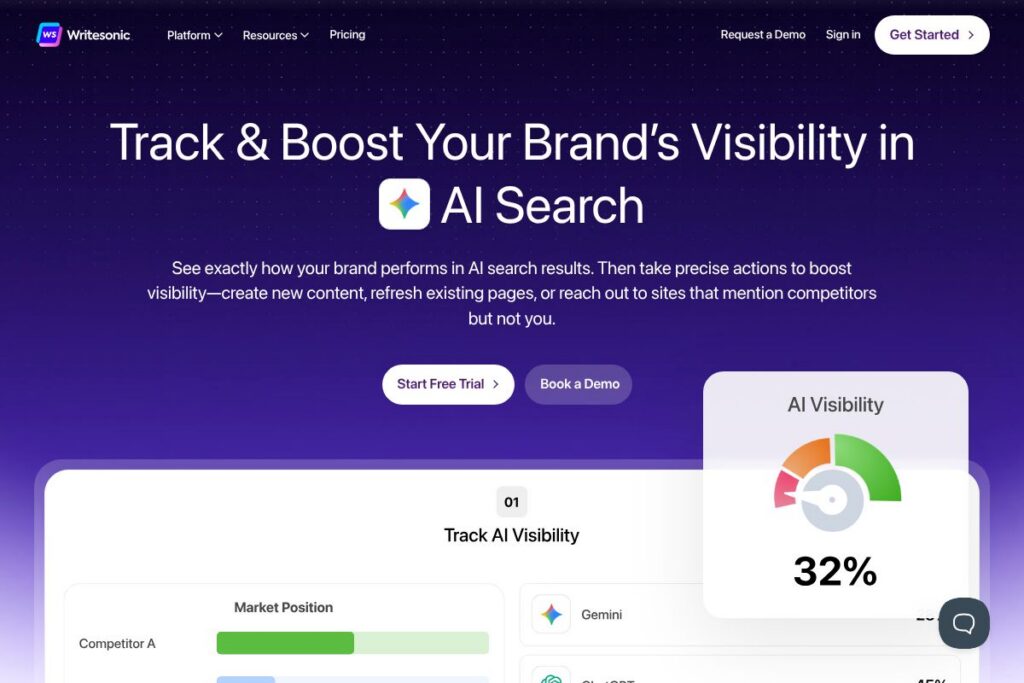
Writesonic is an AI search visibility tracking and optimization platform that measures how often and how positively AI models cite your brand, content, and competitors. It combines prompt-level search volume data, cross-model visibility scores, and technical SEO diagnostics to show where AI recommendations favor other sites and why.
Writesonic sits at the intersection of traditional SEO tools and AI-driven content operations. Compared with Semrush, which focuses on keyword research and backlink analysis, Writesonic emphasizes AI citation data and prompt-level volume. Compared with Ahrefs, which centers on backlink intelligence, Writesonic adds prompt and AI-answer monitoring across multiple models. Compared with SurferSEO, which optimizes on-page content structure, Writesonic pairs content optimization with citation tracking so teams can both create and get credited by AI.
All of this makes Writesonic particularly useful for content teams, SEO managers, and brand teams that need a single workflow from detection through corrective action, including outreach and content refreshes aimed at improving AI visibility.
How Writesonic Works
Project setup begins by connecting the site and defining competitors, seed topics, and geography for tracking. The platform crawls your domain and monitors how various AI models reference your pages, collecting citations, sentiment, and prompt variations.
Once visibility gaps are identified, Writesonic generates prioritized action items: content updates, new article briefs, technical fixes, and outreach targets. Teams can implement suggested fixes directly or export templates for outreach and content production, then watch visibility and citation metrics update in near real time.
Writesonic features
Writesonic bundles visibility tracking, content generation, technical audits, and outreach into a single workflow so teams can find gaps and act on them without switching tools.
AI Visibility Tracking
Track citations and visibility across ChatGPT, Gemini, Perplexity, and over 10 other AI platforms. Filter results by platform, sentiment, and prompt type to see which content AI models reference and which competitor pages are preferred.
Prompt-Level Search Volume
Access predicted search volumes for real natural-language prompts rather than isolated keywords. This helps content teams prioritize the exact questions users ask AI, such as long-form prompts and multi-part queries.
AI Visibility Actions
Receive concrete, ranked actions to close citation gaps including which pages to update, what facts to add, and which external sites to target for citations. Actions are designed to be specific and trackable so teams can measure impact.
Content Engine
Generate and refresh articles that are fact-checked, internally linked, and structured to be both Google-friendly and AI-citable. The engine produces briefs, drafts, and update suggestions aligned to what actually ranks and gets cited.
SEO Integrations and Keyword Data
Built-in support for Keyword Planner and Ahrefs-style data helps teams combine traditional SEO signals with AI visibility insights. That data is used to build topic clusters, prioritize pages, and identify content opportunities.
Automated Technical SEO Fixes
Detect broken schemas, robots rules, crawl errors, and other technical issues that can prevent AI and search engines from citing your content. The platform suggests fixes and, where available, can deploy them without heavy developer involvement.
Competitor Intelligence
Live competitor analysis shows which pages and exact prompts drive citations to other sites. Use that insight to replicate winning structures, add missing facts, and out-quote rivals in AI answers.
Outreach and Citation Management
Identify high-authority sites that mention competitors but not your brand, and get outreach templates and tracking for citation wins. Track outreach success and the change in AI citation behavior after placement.
Forum and UGC Monitoring
Discover Reddit threads, Quora answers, and forum discussions where buyers ask model-style questions. Pinpoint where to contribute or repurpose content to gain UGC citations and topical authority.
Reporting and Filters
Deep filtering lets you slice visibility by model, country, prompt phrasing, and date range. Exportable reports and dashboards support stakeholder updates and performance tracking over time.
With these features combined, Writesonic surfaces precise reasons AI favors competitors and gives your team the tools to close gaps through content, technical fixes, and outreach.
Writesonic pricing
Writesonic uses a subscription and enterprise model with plans tailored to teams of different sizes and use cases; larger organizations can request custom enterprise terms and onboarding. For the most up-to-date plan options and seat or credit-based billing, review Writesonic’s current offerings on the Writesonic homepage.
What is Writesonic Used For?
Writesonic is used to measure and improve brand visibility inside AI search answers, not just on traditional search engine results pages. Teams use it to find which pages AI cites, where citations are missing, and to prioritize content updates that increase the chance of being referenced by models.
Typical users include SEO and content teams at startups through enterprise organizations, PR and outreach teams seeking citation opportunities, and agencies managing AI visibility for multiple clients. It is also used by product marketers monitoring how AI describes product categories and features.
Pros and Cons of Writesonic
Pros
- AI-first visibility data: The platform focuses on how modern AI models cite content and provides prompt-level volume insights that traditional SEO tools do not emphasize.
- Actionable recommendations: Identifies specific fixes such as content updates, outreach targets, and schema corrections so teams can move from diagnosis to results quickly.
- Content and technical tooling in one place: Combines content generation, fact-checking, internal linking, and technical audits, reducing the need for multiple separate tools.
- Enterprise security and compliance: Offers features such as SOC 2 Type II, GDPR, and HIPAA compliance for teams with strict data requirements.
Cons
- Learning curve for prompt-based workflows: Teams used to classic keyword approaches may need time to adapt to prompt-level prioritization and citation-tracking workflows.
- Platform coverage varies by model: Monitoring many AI platforms introduces variance in results across models, so some tuning and interpretation are required to act confidently.
- Enterprise-oriented onboarding: Smaller teams may find some enterprise features and workflows more elaborate than necessary for basic content tasks.
Does Writesonic Offer a Free Trial?
Writesonic offers a free getting-started option and trial access to core features. The free tier provides limited usage and access so teams can evaluate visibility tracking and the content engine, and expanded trial periods or tailored demos are available through the onboarding process on the site.
Writesonic API and Integrations
Writesonic provides developer-facing APIs for content generation and automation; the Writesonic API documentation explains authentication, endpoints, and usage patterns for generating content and integrating visibility signals. See the Writesonic API documentation for developer details.
Key integrations include connections to SEO and analytics platforms such as Ahrefs-style keyword data and Google Search Console, plus data ingestion from forums and social sites used to surface UGC prompts. Teams can also export data via webhooks and CSV for downstream reporting.
10 Writesonic alternatives
Paid alternatives to Writesonic
- Semrush — A full-suite SEO and competitive intelligence platform with keyword research, backlink analysis, and content tools geared toward traditional search visibility.
- Ahrefs — Focuses on backlink analysis and organic search research, with a large index that helps with competitive link and keyword intelligence.
- SurferSEO — Optimizes on-page content structure and provides editors with data-driven content briefs and scoring to improve SERP performance.
- Clearscope — Content optimization tool that recommends terms and structure to improve topical relevance and keyword coverage for articles.
- Jasper AI — AI content generation platform with workflow and collaboration features aimed at scaling content production.
- Moz Pro — Traditional SEO toolkit with rank tracking, on-page audits, and competitive keyword research capabilities.
- Conductor — Enterprise content and SEO platform that combines search insights with content performance analytics for large marketing teams.
Open source alternatives to Writesonic
- Serposcope — An open source rank tracking tool that monitors keyword positions across search engines and provides historical tracking.
- SEO Panel — Provides automated SEO monitoring including keyword position checking and basic site audits for self-hosted use.
- Matomo — Open source analytics that can be used alongside crawl data to analyze organic traffic and user behavior without vendor lock-in.
Frequently asked questions about Writesonic
What does Writesonic track in AI search?
Writesonic tracks AI citations, sentiment, and prompt-level visibility across multiple AI models. It reports which pages are cited, how often, and the prompt variations driving those citations.
Does Writesonic integrate with Google Search Console and keyword tools?
Yes, Writesonic supports integrations with traditional SEO sources such as Google Search Console and keyword planner-style data. Those integrations are used to combine AI visibility signals with conventional search metrics.
Can Writesonic help fix technical SEO issues that block citations?
Writesonic detects common technical barriers and suggests fixes for schemas, crawl errors, and robots rules. Where available, it can provide remediation steps or deploy fixes to reduce friction for AI and search engines.
Is there an API for automating Writesonic workflows?
Yes, Writesonic offers an API for content generation and automation. Refer to the Writesonic API documentation for endpoints, authentication, and example calls.
How do teams measure success with Writesonic?
Teams measure success by increases in AI citation share, improved visibility scores across models, and downstream gains in organic traffic and conversions. Writesonic provides dashboards and exportable reports to track those metrics over time.
Final verdict: Writesonic
Writesonic stands out for combining AI citation tracking with actionable fixes in a single platform. It excels at surfacing why AI models reference competitors and then providing concrete steps including content updates, outreach targets, and technical remediations to improve citation share.
Compared with a broad SEO platform such as Semrush, which provides deep keyword and backlink data, Writesonic focuses specifically on the AI search layer and pairs that with content generation and outreach workflows. For teams prioritizing AI-driven visibility and needing a closed-loop solution from detection to action, Writesonic offers a workflow-oriented alternative to stitching together multiple tools. For traditional SEO depth and backlink analysis, Semrush remains a strong complement to Writesonic’s AI-focused capabilities.