Tito: An Overview
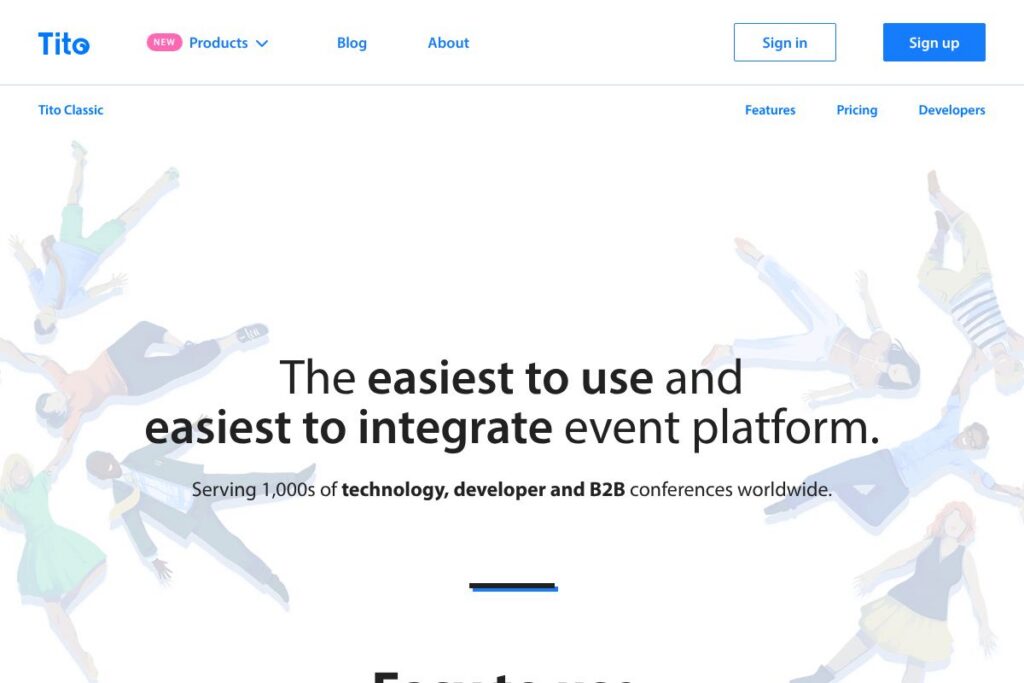
Tito is a focused event registration platform used by many technology, developer, and B2B conferences worldwide. It centers on a compact embeddable widget, APIs and webhooks, and a straightforward organizer interface so you can create an event and accept registrations in minutes.
Compared with Eventbrite, Tito emphasizes direct-site embedding and developer controls rather than a public marketplace. Compared with Cvent, Tito is simpler and more developer-friendly for teams that want to integrate registration into a custom site without a large enterprise setup. Compared with Splash, Tito prioritizes ticketing and checkout robustness over broader event marketing features.
Tito works particularly well for technical conferences, developer meetups, and organizations that want full control of the attendee experience on their site. Its strengths are quick setup, clean embeds, and integration options that make it suitable for teams that maintain their own web presence and analytics stack.
How Tito works
Tito installs on a site via a small JavaScript widget that you drop into your HTML; the widget renders ticket options and a secure checkout without requiring complex front-end code. The same widget supports styling overrides so events can match brand CSS while leaving payment and attendee flows handled by Tito.
Organizers create events in the Tito dashboard and configure ticket types, quotas, promo codes, and attendee fields. During checkout Tito handles payment, issues tickets, and records attendee data which can be exported or delivered to other systems via webhooks and integrations.
Developers can react to JavaScript events from the widget to track conversions, call analytics, or trigger automation. The embed-first model keeps your website as the primary sales channel while delegating ticketing workflows to Tito’s backend; see the JavaScript widget for the minimal install example used on public sites.
Tito features
Tito’s core feature set focuses on registration, embeddable checkout, integrations, and data export. Core capabilities include an embeddable widget, developer hooks and events, payment handling, attendee management, and integrations for analytics and marketing.
Key functionality includes:
Embeddable registration widget
The widget requires two lines of code to add a full registration experience to any site, including script loading and a element. It supports styling with site CSS and exposes JavaScript events so teams can hook into the flow, measure conversions, and adapt the UI.
Ticket types and inventory management
Tito supports multiple ticket types, quotas, early-bird pricing, promo codes, and add-ons so organizers can model common conference pricing structures. Inventory controls and waitlists help manage high-demand tickets and prevent overselling.
Payments and checkout
Tito handles secure payments during checkout and integrates with common payment providers to capture card transactions and refunds. The checkout is PCI-compliant on the provider side so hosts can accept payments without building a payment stack from scratch.
Attendee data and exports
Organizer-facing tools let you collect custom attendee fields, manage registrations, and carry out bulk actions such as emailing or issuing invoices. CSV exports and API endpoints make it straightforward to sync attendee lists with CRM and badge-printing services.
Developer API, webhooks and events
Tito provides developer-facing endpoints and client-side events so teams can automate workflows, create custom reporting, and push registration data into analytics and marketing tools. This makes it possible to build native integrations or trigger server-side actions from registration events.
Integrations and tracking plugins
There are plugins and examples for Google Tag Manager, Facebook tracking, and other analytics platforms so you can capture conversions and attribution data. These integrations work with the widget’s event hooks to keep data accurate across tools.
With these capabilities Tito’s biggest practical benefit is the combination of a minimal install footprint and developer-grade integration points, making it easy to sell tickets from an organizer’s existing website while keeping control of branding and analytics.
Tito pricing
Tito does not publish a dedicated pricing page in the provided material; pricing is handled per account and tailored to event size and feature needs. For current plan options and any volume pricing, check the Tito homepage at Tito homepage which lists available plans and contact paths for larger events.
What is Tito Used For?
Tito is commonly used for ticketed conferences, developer meetups, training events, and B2B gatherings where organizers want to keep attendees on their website during signup. Its embed-first approach avoids sending attendees to an external marketplace checkout.
Event teams use Tito to manage registrations, issue tickets, collect detailed attendee information for badge printing, and feed registration data into analytics and CRM systems. It is also used by event operations teams for reporting, refunds, and on-site check-in workflows.
Pros and cons of Tito
Pros
- Easy embedding: The widget installs with minimal code and supports site-level styling so the checkout feels native to your site.
- Developer-friendly integrations: JavaScript events, APIs, and webhooks allow custom automation and accurate tracking across analytics and marketing tools.
- Focused feature set for conferences: Ticketing, quotas, promo codes, and exports cover the core needs of conference organizers without excessive complexity.
- Proven at scale: Tito is used by thousands of events and reports large cumulative sales figures, indicating reliability for high-volume registrations.
Cons
- Limited built-in marketing tools: If you need a marketplace, email marketing suite, or large-scale attendee engagement features, you may need additional tools alongside Tito.
- Enterprise feature gaps for large RFPs: Organizations that require advanced enterprise procurement features such as deep SSO customization or complex contract terms may need a tailored agreement.
- No public pricing page in source material: Buyers must contact Tito or visit the homepage to get a precise quote for high-volume or custom requirements.
Does Tito Offer a Free Trial?
Tito offers a free trial with no credit card required. New users can create an event and test the full registration flow, including embeds and basic integrations, before committing to a paid plan; visit the Tito homepage to start a trial and create your first event.
Tito API and Integrations
Tito provides API access, webhooks, and client-side events for developers to extend and automate their event workflows. The developer-facing functionality and examples let teams build custom integrations for CRM, analytics, and badge systems; see the JavaScript widget for the embed interface and event hooks.
Common integrations include Google Tag Manager and Facebook tracking plugins, plus the ability to send registration data to Salesforce, HubSpot, or a custom backend via webhooks. These integration points make it simple to maintain a single source of truth for attendee data across systems.
10 Tito alternatives
Paid alternatives to Tito
- Eventbrite — A widely used ticketing and event management platform with a public marketplace and per-ticket fee model, useful if you want exposure outside your own site.
- Cvent — An enterprise-focused event management platform with extensive features for large conferences, sourcing, and venue management.
- Bizzabo — A platform combining ticketing with event marketing and attendee experience features, aimed at conferences and hybrid events.
- Splash — Focused on event marketing and branded experiences, with ticketing capabilities and strong design tools for landing pages.
- Ticket Tailor — A straightforward ticketing service that emphasizes low fees and simple setup for organizers selling tickets directly from their site.
- Hopin — Best known for virtual and hybrid event production, Hopin includes registration, streaming, and expo features for remote-first events.
Open source alternatives to Tito
- Pretix — An open-source ticketing solution with powerful event and ticket management features, self-hosted or available as a managed service.
- Attendize — A PHP-based open-source ticketing system you can self-host to control attendee data and event configuration.
- OpenEvent — A project from FOSSASIA that provides event management and scheduling tools for organizers who prefer open-source stacks.
- OSEM — Open Source Event Manager, a community-maintained project for conferences that includes scheduling and attendee features.
Frequently asked questions about Tito
What is Tito used for?
Tito is used for event registration and ticketing for conferences, meetups, and training events. Organizers use it to sell tickets, collect attendee data, and manage registrations while keeping sales on their own site.
Does Tito integrate with payment processors?
Yes, Tito handles payments through integrated payment providers. The platform manages checkout and card handling so organizers do not need to implement PCI workflows themselves.
How do I embed Tito on my website?
Embedding Tito requires two lines of code: a script and a widget element. The minimal install is shown in the JavaScript widget example at JavaScript widget and supports custom CSS and event hooks.
Can Tito export attendee data to other systems?
Yes, Tito supports CSV exports, webhooks, and API access for attendee data. This makes it straightforward to sync registrations with CRM, badge-printing services, and email platforms.
Is Tito suitable for large conferences?
Tito is suitable for many large conferences, especially those with developer-focused audiences. For very large enterprise events with bespoke procurement or SSO requirements, discuss needs with Tito sales to confirm fit and any custom terms.
Final verdict: Tito
Tito stands out for its embed-first approach and developer-oriented integrations, making it a strong choice for technical conferences and teams that want to sell tickets from their own site with minimal front-end work. Its widget, JavaScript events, and webhook capability let engineering teams integrate registration into an existing analytics and CRM stack without heavy customization.
Compared with Eventbrite, which relies on a per-ticket fee structure and a public marketplace, Tito favors direct-site sales and developer control; this often results in a cleaner branded checkout and better integration options for teams that control their web presence. For organizers who want a simple, developer-friendly registration system that can scale to large events, Tito is a practical, focused option.