What is athenaOne
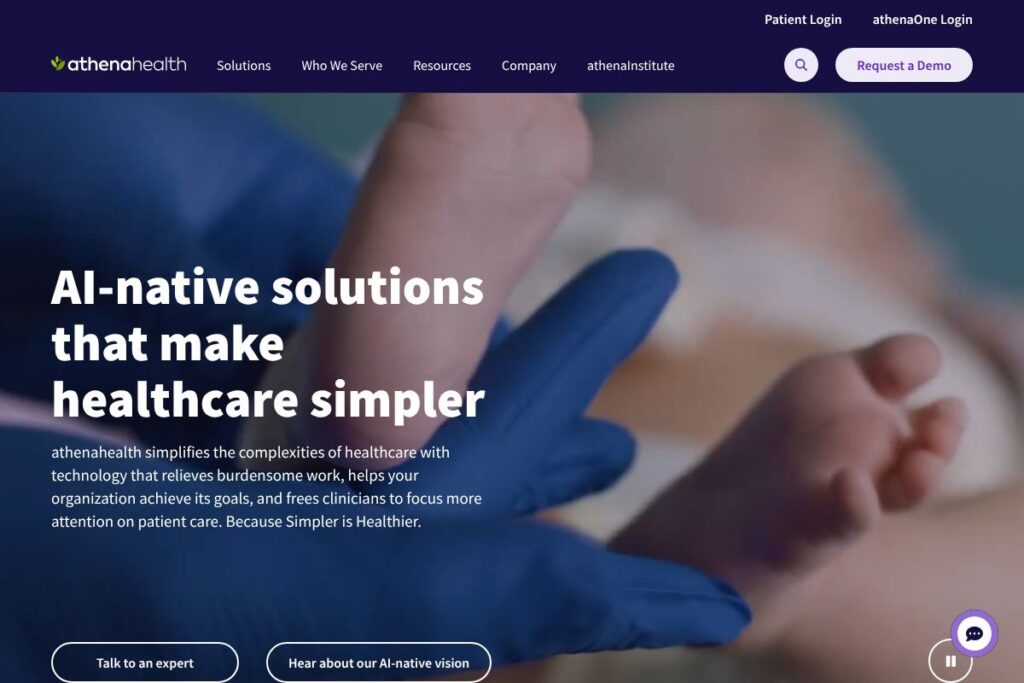
athenaOne is a cloud-based suite designed for ambulatory care that combines clinical, administrative, and financial workflows into a single platform. It bundles electronic health records (EHR), practice management, revenue cycle management (RCM), patient engagement, and network services to reduce operational complexity for medical practices.
Compared with competitors, athenaOne targets ambulatory and independent physician practices with a packaged, network-enabled approach. Compared to Epic, which focuses on large health systems with on-premises and enterprise implementations, athenaOne emphasizes cloud delivery and vendor-managed services that can be faster to deploy. Versus Allscripts, which offers modular on-premise and cloud options, athenaOne is often chosen for its combined services model that pairs software with outsourced billing and support.
athenaOne works well for specialty practices and mid-size groups that need integrated clinical workflows, patient access, and revenue-cycle improvements without managing separate vendors. Its strongest fit is ambulatory practices seeking a single vendor to handle EHR, billing, and network-enabled services.
How athenaOne Works
The platform runs as a cloud service where clinical staff use a web and mobile interface for charting, scheduling, and messaging, while administrative teams access practice management and billing dashboards. Data flows across modules so that encounters, claims, and patient communications are synchronized without manual transfers.
Implementation typically follows a staged onboarding model: workflow mapping, data migration, staff training, and go-live with ongoing managed services. Practices can opt for athenahealth-managed billing and clearinghouse services to outsource claim submission, denial management, and collections.
Clinicians interact with EHR templates and specialty-specific workflows; administrative staff use automated insurance selection and rules engines to reduce denials and speed collections. The vendor network provides population-level insights and interoperability points for labs, payers, and referral partners.
What does athenaOne do?
athenaOne combines core ambulatory capabilities into one platform so practices can manage clinical documentation, revenue cycle, scheduling, and patient engagement from a shared system. Recent emphasis includes ambient documentation, rules-driven revenue-cycle workflows, and expanded specialty templates to reduce administrative work.
The platform includes clinical charting, appointment scheduling, billing and claims management, patient portal and communication tools, and analytics for financial and operational performance. It integrates network services that connect practices to payers, labs, and other providers to streamline information exchange.
The platform’s biggest benefit is reducing administrative friction by connecting clinical and financial workflows, which helps practices focus more time on patient care and less on reconciliation and claims processing.
Electronic Health Record (EHR)
Shared charting templates, diagnosis and orders workflows, and specialty-specific content help clinicians document efficiently. The EHR supports structured data capture for coding and quality reporting, which improves chart completeness and downstream billing accuracy.
Revenue Cycle Management (RCM)
RCM combines automated insurance selection, claims submission, denial management, and collections analytics to improve cash flow. Practices that adopt athenaOne often see measurable improvements in collections and reductions in overhead related to billing tasks.
Practice Management and Scheduling
Centralized scheduling, eligibility checks, and front-desk workflows reduce no-shows and streamline patient intake. The scheduling module ties directly to billing and clinical encounters to minimize administrative handoffs.
Patient Engagement
Patient-facing tools include a portal for messages, appointment requests, and billing statements, plus secure messaging and reminders. These tools are intended to improve access, streamline communications, and accelerate patient payments.
Ambient Documentation and AI-Assisted Tools
Embedded ambient capabilities and documentation assistants reduce the time clinicians spend on notes by capturing conversation and suggesting structured entries. These features aim to lower documentation burden and improve clinician satisfaction.
Analytics and Reporting
Operational and financial dashboards surface revenue trends, denial rates, and productivity metrics so managers can prioritize interventions. Reporting supports quality measures and operational planning for both practice-level and network-level views.
With these capabilities, athenaOne focuses on connecting clinical care to billing and administrative operations so practices can operate with fewer manual processes and clearer performance insights.
athenaOne pricing
athenaOne uses an enterprise, subscription-based pricing model with custom quotes tailored to practice size, specialties, and required service mix. Pricing is not published as a simple per-user plan because implementations often include software, managed billing services, and network services that vary by customer.
For tailored cost estimates and subscription options, request a personalized athenaOne demo or contact sales through the athenahealth homepage to discuss deployment models, managed services, and contractual terms. The vendor typically provides proposals that cover software licensing, onboarding, ongoing support, and optional managed revenue-cycle services.
What is athenaOne Used For?
athenaOne is commonly used by independent physician practices, multi-location ambulatory groups, and specialty clinics that need integrated clinical and financial workflows. It is suited for specialties that require tailored templates and workflow support, such as cardiology, orthopedics, and behavioral health.
Organizations use athenaOne to reduce claim denials, centralize scheduling and billing, and improve patient access through digital engagement. Health systems also deploy it for ambulatory network expansion where cloud delivery and outsourced RCM help standardize operations across multiple practices.
Pros and cons of athenaOne
Pros
- Integrated clinical and financial suite: The platform ties EHR, practice management, and revenue cycle in a single environment which reduces manual reconciliation and data silos.
- Network-enabled services: Connected clearinghouse and payer integrations simplify claims processing and eligibility checks, improving collections and reducing denials.
- Specialty-specific workflows: Built-in templates and workflows reflect how clinicians in different specialties work, which speeds documentation and chart completeness.
- Managed services option: For practices that prefer outsourcing billing and claims management, athenaOne offers managed RCM that can free internal staff for patient-facing tasks.
- Ambient documentation features: Embedded documentation assistants help reduce the time spent on notes and administrative charting tasks.
Cons
- Custom pricing and contracts: Enterprise pricing requires sales engagement which can make cost comparisons harder for small practices evaluating multiple vendors.
- Change management for staff: Moving to an integrated cloud suite requires workflow redesign and training that smaller practices may find resource-intensive.
- Less suited for very large inpatient systems: Organizations with extensive inpatient needs often prefer enterprise platforms built for hospital workflows like Epic or Cerner.
- Variable user experience across specialties: While specialty templates exist, some practices report the need for customization to match local workflows, which can extend implementation time.
Does athenaOne Offer a Free Trial?
athenaOne is a paid, enterprise platform with no public free plan, but athenahealth offers demos and sales consultations that allow practices to see workflows and platform capabilities. Interested organizations can request a personalized athenaOne demo to review features, implementation timelines, and service options.
athenaOne API and Integrations
The platform provides developer-facing APIs and interoperability tools to connect labs, payers, referral partners, and third-party clinical apps. The athenahealth developer documentation describes available endpoints, authentication methods, and integration patterns for data exchange using common healthcare standards.
Key integrations include lab and imaging interfaces, payer connections for eligibility and claims, practice-level tools for scheduling and messaging, and third-party analytics or telehealth vendors. Integration options help practices extend the platform without disrupting core workflows.
10 athenaOne alternatives
Paid alternatives to athenaOne
- Epic — Enterprise EHR with deep inpatient and ambulatory functionality for large health systems, strong interoperability and extensive module coverage.
- Cerner — Comprehensive clinical and revenue cycle suite used by health systems and hospitals, known for wide adoption and enterprise-scale deployments.
- Allscripts — Offers both cloud and on-premise EHR and practice management solutions with a mix of clinical and financial tools for ambulatory care.
- NextGen Healthcare — Focuses on ambulatory practices with EHR, RCM, and population health tools designed for small to mid-size groups.
- eClinicalWorks — Cloud-native EHR and practice management system with telehealth and patient engagement features tailored to ambulatory providers.
- Practice Fusion — Cloud EHR aimed at smaller practices with streamlined workflows and patient portal capabilities.
- Kareo — Practice management and billing platform built for independent practices and smaller groups that need lightweight RCM and scheduling.
Open source alternatives to athenaOne
- OpenEMR — An open-source electronic medical record and practice management system that can be self-hosted and customized for ambulatory workflows.
- OpenMRS — A modular open-source medical record platform widely used in global health settings and adaptable for outpatient clinics.
- GNU Health — A free, open-source health and hospital information system with clinical and public health modules suitable for smaller deployments.
- OSCAR EMR — Community-driven EHR used in several countries, offering customizable clinical workflows and charting for ambulatory care.
Frequently asked questions about athenaOne
What does athenaOne do for ambulatory practices?
athenaOne provides a combined EHR, practice management, revenue cycle, and patient engagement platform designed to handle scheduling, documentation, billing, and patient communications in a single system.
Does athenaOne integrate with other clinical systems?
Yes, athenaOne supports APIs and standard interfaces for labs, payers, and third-party apps. Explore the athenahealth developer documentation for technical details and available endpoints.
How much does athenaOne cost compared to other EHRs?
athenaOne uses custom, enterprise pricing based on practice size and service mix. For an accurate quote and deployment options, request a personalized athenaOne demo through the athenahealth homepage.
Can athenaOne reduce claim denials and improve collections?
Yes, athenaOne includes automated insurance selection, a rules engine, and managed RCM services that are designed to reduce patient insurance-related denials and improve collections efficiency for practices.
Is athenaOne suitable for specialty practices?
Yes, athenaOne offers specialty-specific templates and workflows for a broad set of ambulatory specialties, which can reduce documentation time and improve chart completeness.
Final verdict: athenaOne
athenaOne is a comprehensive, cloud-native platform built to unify clinical, administrative, and financial workflows for ambulatory care. Its strengths are the integrated revenue-cycle capabilities, network-enabled services, specialty-specific workflows, and managed services options that reduce the operational burden on smaller practices.
Compared with Epic, which targets large health systems with enterprise contracts and extensive inpatient functionality, athenaOne is positioned for ambulatory practices and independent groups that prefer cloud delivery and outsourced billing support. Pricing for both vendors is negotiated per engagement, but athenaOne’s bundled services often make it more accessible to mid-size and independent practices seeking an all-in-one ambulatory solution.
Overall, athenaOne is well suited to ambulatory clinics and specialty practices that want a single vendor to manage EHR, billing, and connectivity while reducing administrative complexity and improving financial performance. For pricing, implementation timelines, and service options, request a personalized athenaOne demo to discuss how the platform can be configured for your organization.