What is PrestaShop
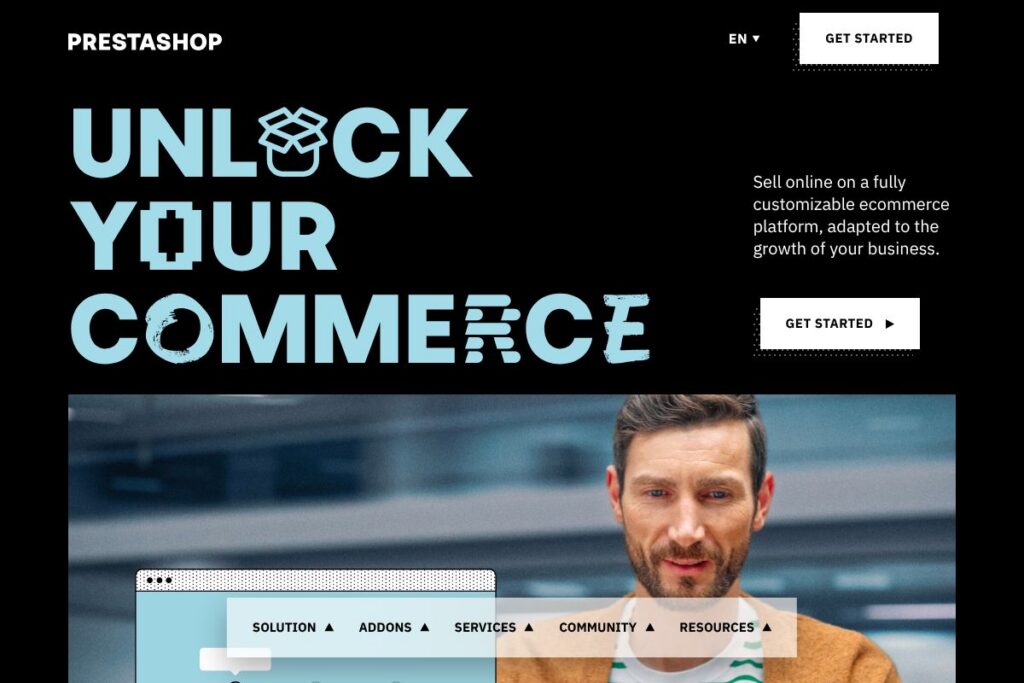
PrestaShop is an open-source ecommerce platform that gives merchants full control over their online store and data. It combines a web-based admin interface for catalog, orders, customer management, and settings with a modular architecture so merchants can extend functionality through add-ons and themes.
Compared with hosted platforms such as Shopify and page-builder services like Squarespace, PrestaShop requires self-hosting and more technical setup but removes recurring platform lock-in. Against open-source alternatives such as WooCommerce and Magento Open Source, PrestaShop sits in the middle by offering a user-focused back office and a dedicated marketplace for modules and themes that reduce custom development work.
PrestaShop works well for merchants who want ownership of their store, need flexible product and pricing models, and are prepared to manage hosting or use a managed host. Its ecosystem and community support make it suitable for entrepreneurs starting small and for shops that plan to scale while retaining control over data and customizations.
How PrestaShop Works
The platform is delivered as self-hosted software you install on a web server or via a managed hosting partner. Once installed, you use the back office to import products, create categories, configure shipping and taxes, and set payment methods.
Customization happens through themes for the storefront and modules for functionality; installable modules add features such as advanced payment gateways, shipping connectors, or marketing tools. Merchants typically follow a workflow: install PrestaShop, pick and customize a theme, add products, install essential modules, and configure checkout and logistics before going live.
PrestaShop features
PrestaShop centers on flexible store configuration and extensibility. Core capabilities include product and inventory management, a modular add-on system, theme-based storefront customization, multistore features, and built-in SEO and checkout tools. The ecosystem continues to grow through the official marketplace and developer contributions.
Storefront and Themes
Storefronts are driven by themes that control layout, responsive behavior, and front-end templates. Merchants can choose from prebuilt themes in the Addons marketplace to speed up launch and then tweak templates or CSS for brand consistency.
Product Catalog and Inventory
The product catalog supports simple, virtual, and configurable products with combinations, large catalogs, digital downloads, and inventory tracking. Bulk import/export, product attributes, and supplier references help manage catalogs that range from a few items to thousands.
Modules and Addons Marketplace
PrestaShop extends via installable modules that add payments, shipping, analytics, marketing, and integrations. The Addons marketplace hosts thousands of paid and free modules so merchants can add targeted functionality without building from scratch; use the marketplace to compare options and read user ratings.
Checkout and Payments
The platform supports customizable checkout flows and integrates with common payment gateways via modules. Merchants can enable one-page checkout, guest checkout, and configure payment methods and fraud prevention tools appropriate to their market.
Multi-store and Multichannel Selling
PrestaShop includes built-in multi-store management so a single back office can run multiple storefronts with shared or separate catalogs. Integrations and modules extend reach to marketplaces and social channels so merchants can sell on additional platforms from the same inventory.
SEO and Marketing Tools
Built-in SEO features include editable meta tags, friendly URLs, sitemaps, and canonical tags to improve search visibility. Marketing modules add promotions, abandoned cart recovery, email campaigns, and integrations with analytics and advertising platforms.
Reporting and Analytics
The back office provides basic sales, product, and customer reports, with the option to extend analytics via modules or integrate third-party BI tools. Merchants can track conversions, average order value, and inventory performance to inform merchandising and marketing decisions.
Security and Compliance
Core updates address security fixes and PrestaShop supports common ecommerce requirements like SSL, PCI-compliant payment modules, and role-based access for staff. Merchants remain responsible for secure hosting and backups; many hosts and modules offer managed security options.
With modular themes and a large ecosystem of add-ons, the biggest benefit is flexibility: you can start with a standard store and progressively add integrations and customizations as business needs evolve. Explore the Addons marketplace to find modules and themes for common ecommerce needs.
PrestaShop pricing
PrestaShop is distributed as open-source software with no required subscription for the platform itself. Merchants typically budget for hosting, premium themes, paid modules, and optional support services rather than a platform license fee.
Typical costs to plan for:
- Hosting: Variable (shared, VPS, or managed hosting) depending on traffic and performance needs.
- Themes and Modules: Variable (many paid modules and themes are available in the Addons marketplace).
- Support and Services: Variable for professional setup, development, or managed hosting.
For direct downloads and official distribution options, see the official PrestaShop download page. To browse extensions that may carry one-time or recurring costs, consult the Addons marketplace.
What is PrestaShop Used For?
PrestaShop is used to build online storefronts that require granular control over products, pricing, and checkout behavior. Common uses include standalone ecommerce sites, multi-store deployments, and retailers that sell across web and marketplaces while keeping centralized inventory.
Ideal users include small to mid-sized retailers that want ownership of their platform, merchants with specific integration needs that out-of-the-box hosted solutions cannot address, and agencies that manage custom implementations. Because it is self-hosted, technical teams or hosting partners typically handle deployment and maintenance.
Pros and cons of PrestaShop
Pros
- Full data ownership: You retain control of store data and hosting choices, which helps with compliance and migration options.
- Large extension ecosystem: Thousands of modules and themes are available in the Addons marketplace to add payments, shipping, marketing, and integrations quickly.
- Flexible product management: Supports complex product types, combinations, and catalog structures suited to diverse inventories.
- Multi-store capabilities: Manage several storefronts from one back office, which is useful for regional or brand-specific deployments.
Cons
- Hosting and maintenance responsibility: You must manage hosting, security, backups, and performance tuning or pay for managed services.
- Variable total cost: While the core software is free, costs for modules, themes, and hosting can add up and require careful budgeting.
- Technical setup for advanced features: Custom integrations and significant customizations often require developer skills or agency support.
Does PrestaShop Offer a Free Trial?
PrestaShop is free and open-source. You can download and install the software at no platform cost; trial periods are not required for the core product. Merchants should plan for hosting and any paid modules or themes that may be needed during setup.
PrestaShop API and Integrations
PrestaShop provides a webservice API and developer documentation that exposes store resources for products, customers, orders, and more. Refer to the developer documentation for API endpoints, authentication, and examples.
The platform integrates with common payment gateways, shipping carriers, ERP systems, and analytics tools through modules available in the Addons marketplace; popular connectors include gateways, fulfillment partners, and marketplace listing tools. Use the marketplace to discover prebuilt integrations for your stack.
10 PrestaShop alternatives
Paid alternatives to PrestaShop
- Shopify — Hosted SaaS ecommerce platform with subscription pricing and a focus on quick setup, POS, and app integrations.
- BigCommerce — Hosted solution for growing merchants that includes built-in features and a tiered subscription model for scaling stores.
- Squarespace — Website builder with ecommerce capabilities suitable for small catalogs and visually-driven stores.
- Wix eCommerce — Drag-and-drop site builder with integrated ecommerce features and subscription plans for merchants.
- Ecwid — Lightweight ecommerce solution that can be added to existing sites and social channels, offered with subscription tiers.
Open source alternatives to PrestaShop
- WooCommerce — WordPress plugin that turns a WordPress site into an ecommerce store, widely used and highly extensible.
- Magento Open Source — Robust open-source platform designed for larger catalogs and complex ecommerce requirements.
- OpenCart — Lightweight open-source cart with a straightforward admin and extension market.
- Saleor — Modern GraphQL-first open-source ecommerce platform built for headless commerce and developer-driven projects.
Frequently asked questions about PrestaShop
Is PrestaShop free to use?
PrestaShop is free to download and use under an open-source license. Costs arise from hosting, paid modules, premium themes, and optional professional services.
Can PrestaShop be hosted on any web host?
Yes, PrestaShop can be installed on compatible PHP/MySQL web hosts or on managed hosting providers. Choose a host that meets the platform’s performance and security recommendations for production traffic.
Does PrestaShop have an API for custom integrations?
Yes, PrestaShop offers a webservice API documented in its developer documentation. The API lets developers read and write products, orders, customers, and other resources for integrations and custom apps.
Can PrestaShop handle large product catalogs?
PrestaShop can support large catalogs when paired with appropriate hosting and optimization. Performance depends on server resources, caching, and how modules and indexing are configured.
Does PrestaShop integrate with major payment gateways?
Yes, PrestaShop integrates with major payment gateways via modules. Many gateways provide official or third-party modules in the Addons marketplace to enable local and international payment methods.
Final verdict: PrestaShop
PrestaShop stands out as a flexible, open-source ecommerce platform that prioritizes merchant control and extensibility. It is especially suited to businesses that want ownership of their data, a modular approach to adding features, and the ability to customize storefront and workflows beyond what hosted SaaS platforms typically allow.
Compared with a hosted competitor such as Shopify, which uses subscription pricing and includes hosting in its plans, PrestaShop avoids a recurring platform fee but requires merchants to manage hosting and some technical maintenance. For merchants with the resources to manage infrastructure or the budget for managed services, PrestaShop delivers greater flexibility at potentially lower platform cost over the long term compared with subscription models like Shopify at $29/month starting plans.
Overall, PrestaShop is a practical choice for merchants who value customization and ownership and who are prepared to plan for hosting, extensions, and support as part of their ecommerce budget. Explore the official PrestaShop site and the Addons marketplace to evaluate modules and hosting options for your store.