SAP in a Nutshell
SAP is a suite of enterprise software and cloud services designed to run core business processes across finance, procurement, human resources, supply chain, sales, and customer service. The platform bundles modular cloud ERP applications, data services, and embedded AI to help organizations convert operational data into coordinated action and continuous process improvement. Explore SAP’s enterprise software catalog to see available products and industry solutions.
SAP competes directly with broad enterprise application vendors such as Oracle Cloud ERP, Microsoft Dynamics 365, and Salesforce. Compared with Oracle Cloud ERP, SAP is often chosen for its deep industry-specific functionality and extensive partner ecosystem, while Oracle emphasizes integrated cloud infrastructure and database services. Compared with Microsoft Dynamics 365, SAP targets larger, complex deployments with strong process orchestration across operations; Dynamics 365 can be more attractive for organizations already invested in Microsoft platforms.
All of this makes SAP well suited for medium to large organizations that require end-to-end process integration, industry templates, and a broad marketplace of partner extensions. SAP’s strengths include integrated data models, embedded AI across business processes, and multi-cloud deployment options, which appeal to enterprises focused on operational scale, regulatory compliance, and sustainability reporting.
How SAP Helps Enterprise IT and Business Teams
SAP organizes business processes around a shared data layer and a set of modular applications so teams can act on the same trusted information. Companies typically deploy a core cloud ERP, connect operational systems and third-party apps through APIs, and then use integrated analytics and embedded AI to drive decisions into transactional processes.
A typical workflow looks like this: operational systems feed contextualized data into SAP Business Data Cloud, AI models in SAP Business AI generate recommended actions, and SAP Cloud ERP applications execute those actions in procure-to-pay, order-to-cash, or manufacturing workflows. Implementation is commonly done with SAP partners that handle configuration, integrations, data migration, and change management.
SAP features
SAP’s product portfolio centers on integrated ERP, data management, AI that runs inside business processes, and a broad partner marketplace. Recent emphasis is on embedded AI capabilities and sustainability tools that help companies measure and report environmental metrics while automating operational decisions.
SAP Business AI
Embedded AI capabilities apply machine learning and process intelligence directly inside transactions, helping users with tasks such as predictive demand planning, automated invoice processing, and intelligent order promising. These AI features reduce manual work by surfacing suggested actions in the same screens users already work in, rather than requiring separate tools.
SAP Business Data Cloud
This capability unifies trusted, contextualized data across systems so analytics and AI deliver consistent results across teams. It focuses on data harmonization, master data management, and governance so that operational processes and AI use the same authoritative records.
SAP Cloud ERP applications
Cloud ERP modules provide core capabilities for finance, procurement, manufacturing, supply chain, and commerce, with orchestration features that link processes end to end. Cloud ERP applications use embedded analytics and AI to automate routine tasks and to highlight exceptions that require human attention.
Sustainability and Compliance Tools
SAP includes solutions for tracking environmental, social, and governance metrics, calculating carbon footprints, and maintaining regulatory reporting across multiple jurisdictions. These tools integrate with operational data so sustainability measures are tied directly to business activity, enabling audit-ready reporting.
Partner Ecosystem and Extensions
A large partner marketplace provides prebuilt industry extensions, implementation services, and third-party apps that plug into SAP core systems. This ecosystem accelerates deployments with industry templates, managed services, and certified integrations.
With these capabilities combined, SAP aims to provide an integrated platform that turns data into operational decisions, helps automate repeatable work, and supports complex, industry-specific requirements at enterprise scale.
SAP pricing
SAP uses an enterprise pricing model that is tailored to product selection, deployment model, number of users, and service requirements; pricing is typically provided through quotes rather than a single public rate card. For specific pricing for cloud ERP, data services, or industry solutions, review SAP’s licensing and pricing information and request a tailored estimate from SAP sales or an authorized partner.
What is SAP Used For?
SAP is commonly used to run mission-critical enterprise processes including finance and accounting, procurement, manufacturing execution, supply chain planning, and customer order management. Organizations deploy SAP to achieve consistent process execution, centralized reporting, and compliance across multiple regions and business units.
SAP is also used to operationalize AI and sustainability programs by embedding analytics and environmental reporting into core workflows, which helps teams make faster decisions while maintaining audit trails and governance.
Pros and Cons of SAP
Pros
- Comprehensive industry coverage: SAP offers deep, industry-specific functionality for manufacturing, retail, utilities, life sciences, and other sectors, which reduces the need for heavy customization in those industries. Implementation partners commonly deliver industry templates that accelerate time to value.
- Integrated data and process model: A unified data architecture and master data capabilities make it easier to coordinate actions across finance, supply chain, and operations, which improves consistency and reporting accuracy.
- Embedded AI and analytics: AI that runs inside business transactions helps automate tasks, highlight exceptions, and deliver prescriptive recommendations at the point of decision, reducing manual effort and latency.
- Large partner ecosystem: A broad marketplace of partners and certified extensions enables specialized implementations, managed services, and third-party integrations to address complex requirements.
Cons
- Complex implementation: Large-scale SAP deployments require careful planning, skilled consultants, and often significant change management, which can increase project timelines and costs. Organizations should budget for configuration, testing, and user training.
- Upfront integration effort: Connecting SAP to legacy systems and third-party applications can be resource intensive, especially when data needs significant harmonization for master data and reporting purposes.
- Custom licensing conversations: Pricing and licensing are tailored, which can complicate vendor comparisons; procurement teams should ensure they understand usage metrics and total cost of ownership.
Can You Test SAP Before Buying?
SAP offers tailored trial options and sandbox environments for many of its products. Evaluation programs, product trials, and developer sandboxes are available for specific SAP cloud services and applications; interested teams can explore SAP’s trial and developer offerings to run pilots or proof-of-concept projects and determine fit before committing to production licensing.
SAP API and Integrations
SAP provides developer APIs and prebuilt connectors via the SAP API Business Hub, which exposes endpoints for ERP, finance, supply chain, and other modules. The SAP API Business Hub contains documentation, sample calls, and integration packages to help developers extend and connect SAP systems.
Key integrations include third-party cloud platforms and services from providers such as Microsoft, Google Cloud, Amazon Web Services, and CRM platforms like Salesforce, plus numerous partner connectors for analytics, payment, and logistics systems. These integrations let teams combine SAP capabilities with existing cloud services and tools in their technology stack.
10 SAP alternatives
Paid alternatives to SAP
- Oracle Cloud ERP — Broad cloud ERP suite with integrated database and infrastructure services, strong finance and supply chain functionality.
- Microsoft Dynamics 365 — Modular business apps with tight integration to Microsoft 365 and Azure, suited for companies invested in the Microsoft ecosystem.
- Salesforce — Customer relationship and revenue operations platform, often paired with ERP systems for complete front-to-back processes.
- Workday — Focused on finance and human capital management, chosen by organizations seeking modern HR and finance capabilities.
- NetSuite — Cloud-first ERP for fast-growing companies, popular for companies moving from spreadsheets and disparate systems.
- Infor CloudSuite — Industry-specific suites with embedded domain functionality for manufacturing and distribution.
- IFS — Enterprise applications focused on asset-intensive industries and field service management.
Open source alternatives to SAP
- Odoo — Modular open source ERP with apps for accounting, inventory, manufacturing, and sales, suitable for small to mid-sized businesses.
- ERPNext — Full-featured open source ERP that covers accounting, manufacturing, inventory, and HR for small and mid-market organizations.
- Apache OFBiz — A framework for building custom ERP and e-commerce solutions with a strong developer focus.
- Dolibarr — Lightweight open source ERP and CRM for small businesses and nonprofits.
- Tryton — Modular, Python-based ERP for custom deployments and integrations.
Frequently asked questions about SAP
What is SAP used for?
SAP is used to manage core enterprise processes such as finance, procurement, supply chain, manufacturing, and HR. Organizations choose SAP to centralize operations, enforce consistent processes, and produce consolidated reporting across business units.
Does SAP support embedded AI capabilities?
Yes, SAP includes embedded AI features that operate inside business transactions. These capabilities provide recommendations, predictive insights, and automation within ERP and process screens so users get actionable guidance where they work.
Can SAP integrate with other cloud platforms like AWS or Azure?
Yes, SAP supports integrations with major cloud platforms and third-party services. The SAP API Business Hub and certified partner connectors are common ways to connect SAP to AWS, Microsoft Azure, Google Cloud, and specialized SaaS tools.
How is SAP licensed and priced?
SAP uses tailored enterprise licensing and subscription models based on selected products and deployment options. Pricing depends on modules, user types, cloud versus on-premise deployment, and service levels, so organizations typically request a quote or work with an authorized partner for a customized estimate.
Is SAP suitable for small businesses?
SAP can serve small businesses, particularly those with complex processes or rapid growth, but many small organizations prefer lighter-weight or packaged cloud ERP offerings. For smaller deployments, SAP and partners offer scaled cloud editions and starter packages to reduce implementation scope.
Final Verdict: SAP
SAP is a comprehensive enterprise platform that excels at connecting data, processes, and AI across large and complex organizations. Its strengths lie in deep industry functionality, a unified data model, and embedded AI that operates inside business workflows, which together support rigorous reporting, compliance, and continuous process improvement.
Compared with Oracle Cloud ERP, which also targets enterprise customers and uses custom pricing, SAP typically emphasizes industry-specific templates and a larger partner marketplace, while Oracle highlights its cloud infrastructure and database integration. Both platforms rely on tailored licensing, so decisions should be made by comparing functionality, partner capabilities, and total cost of ownership for the specific deployment scenario.
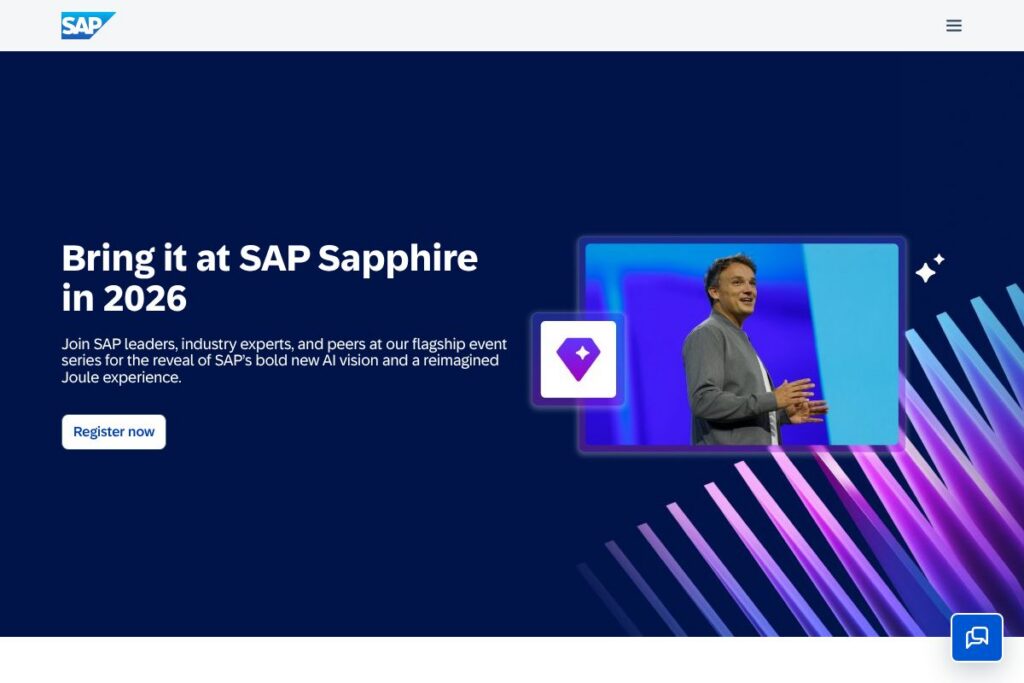
For teams evaluating core systems, SAP is a strong choice when you need end-to-end process orchestration, enterprise-grade governance, and an extensible partner ecosystem that can deliver industry solutions at scale. Learn more about SAP product offerings and upcoming events such as the SAP Sapphire event series to see demonstrations of new capabilities and AI innovations.